How to Buy the Grays Currency on Coinbase

Disclosure: This post may contain affiliate links, meaning if you decide to make a purchase through my links I may earn a commission at no additional cost to you. See my disclosure for more info.
Build A Smarter Online Business
Want to turn your content into traffic, income, and long-term freedom? Start with the guides built to help you grow smarter.
Explore Online Business Guides →If you’re trying to keep life simple (train, recover, repeat), crypto can feel like the opposite. I’ve seen a lot of runners search how to buy the Grays Currency on Coinbase, expecting a quick “Buy” button and a clean checkout.
As of March 2026, Grays Currency (aka PTGC) isn’t available to buy on Coinbase in the normal, beginner-friendly way. Coinbase may show a PTGC price page, but that’s not the same as being able to place a trade. In plain terms, you won’t find an active Coinbase trading pair, you won’t get a one-tap “Buy” flow, and there isn’t a simple Coinbase Wallet shortcut that reliably gets you from dollars to TGC.
That gap is where people get burned, especially when lookalike tickers, fake contract addresses, and “support” scammers start showing up in search and social. When you’re already tired from workouts and juggling life, it’s easy to click the first thing that looks official and hope for the best.
In this post, I’ll show what I do instead. First, I’ll walk through quick ways to confirm whether a token is actually listed for trading on Coinbase (not just displayed). Next, I’ll cover a few basic scam checks I run every time, because safety matters more than speed here.
Finally, I’ll point you to beginner-friendly alternatives that have shown PTGC markets, like Phemex, plus the option of using a PulseChain DEX if you’re comfortable with a wallet and on-chain swaps.
Back to How Much Money Do You Need to Start Crypto Trading
First, confirm whether Grays Currency is actually listed on Coinbase
Before I move a single dollar, I separate “Coinbase shows a price” from “Coinbase lets me trade it.” As of March 2026, Grays Currency (TGC, also seen as pTGC or PTGC) is not listed for trading on Coinbase. Coinbase may display a PTGC price page, but there’s no real spot market, no trading pair, and no working Buy button for the token. The good news is how to buy PTGC is fairly easy once you get the swing of things.
How I check Coinbase the right way (and what I look for)
I do the same quick routine every time, because it keeps me from “hope-clicking” into a mistake. If I’m trying to figure out how to buy the Grays Currency on Coinbase, I need Coinbase to support actual trading, not just show a chart.
Here’s what I check:
Ready To Build More Traffic And Income?
Use Internet of Business to learn blogging, SEO, affiliate marketing, passive income, and digital business systems that compound over time.
Start Building Your Digital Income →- Search in the Coinbase app: I type
TGC,PTGC, andGrays Currency. Then I open the result that looks most official. - Look for a real asset trading screen: I’m looking for an obvious Buy button that leads to an order or checkout flow.
- Check for trading pairs: On a real listing, I expect to see a market like
PTGC-USDorPTGC-USDT(or similar) with order options. - Repeat on Coinbase.com: I search on the site too, because sometimes pages look different in-app.
If all I find is a price page (charts, “market stats,” maybe news snippets) but no pairs and no Buy/Sell, that answers it. In that case, I treat it like a shoe review with no “Add to cart.” Interesting, but I can’t buy it there.
If Coinbase doesn’t offer a trading pair and a Buy button for the asset, I assume I can’t buy it on Coinbase, no matter what a screenshot says.
Learn More About the PTGC Crypto Coin Here
Spotting fake “Coinbase listing” claims before they cost me money
When a token isn’t actually tradable on Coinbase, scammers fill the gap with confident lies. I’ve learned to read those claims the way I read a too-good-to-be-true workout, if it sounds magical, it’s probably a trap.
Common patterns I watch for:
- Sponsored posts that mimic news: Paid “listing alerts” that look official, but link to random sites.
- Fake Coinbase support accounts: DMs that offer “help” and push me to click a link.
- Lookalike tickers and names: A scam token that’s one letter off, or uses a similar symbol.
- Fake contract addresses: Someone posts an address and claims it’s the “new” or “updated” version.
- “Send funds to activate” messages: Anything that asks me to send crypto first is a hard no.
My quick checklist before I trust anything:
- I don’t trust screenshots of a Buy button or “Coinbase listing” banners.
- I verify using official Coinbase channels (Coinbase app, Coinbase.com, and official Coinbase social accounts).
- I never share my seed phrase, and I don’t enter it on any site, ever.
- I avoid links sent by DMs, even if the profile looks real.
Ticker confusion: TGC vs pTGC vs PTGC, why names can trick people
This is where people get tripped up. The same project can appear under different symbols, and on different sites, that’s normal in crypto. The problem is that scammers use that confusion like a hidden pothole on a run route.
For Grays Currency, I’ve seen TGC, pTGC, and PTGC used in the wild. Before I swap anything, I verify two things: the network and the exact contract address. For Grays Currency, the official token is on PulseChain, and the official TGC contract address shown by the project is:
- 0x94534EeEe131840b1c0F61847c572228bdfDDE93
Then I cross-check it on PulseScan (PulseChain’s explorer). If the address doesn’t match, I stop. If a DEX pair shows a different address, I assume it’s the wrong asset until proven otherwise.
Why you can’t buy Grays Currency on Coinbase right now (and what Grays Currency is)
When I search how to buy the Grays Currency on Coinbase, I’m looking for a simple path: tap Buy, choose dollars, done. The problem is that, as of March 2026, Coinbase doesn’t offer Grays Currency for trading in the usual way. Coinbase may show a PTGC price page, but that’s not the same as a real market with a trading pair and an order screen.
Below is how I explain Grays Currency in plain language, plus why a missing Coinbase listing is normal for a lot of tokens.
Learn More About the PTGC Crypto Coin Here
Grays Currency in plain English: the burn, the tax, and the rewards idea
Grays Currency (often shown as TGC, pTGC, or PTGC) is a deflationary token on PulseChain. Deflationary is a simple idea: the supply starts high, then it shrinks over time. Think of it like a big bag of recovery snacks that slowly gets smaller, not bigger.
Here’s the basic “how it works” concept, without the hype:
- Burns (supply shrinks): A portion of activity is used to buy tokens and “burn” them, meaning they get destroyed and removed from supply. Over time, that can reduce how many tokens exist.
- A trade tax (fees on buys and sells): Each trade can include a fee (commonly described as a 5% tax). That tax is designed to fund a mix of things like rewards, liquidity support, a community treasury, and burns.
- Rewards and staking (possible payouts): Holders may receive rewards (often called reflections), and there may be staking options designed to increase rewards. The key point is that the system tries to pay rewards based on on-chain activity, rather than minting endless new tokens.
I’ve also seen Grays Currency labeled a “meme token” in some places, mostly because it’s a smaller, community-driven project and the naming can feel meme-adjacent. Still, the mechanics people talk about are more like DeFi: burns, transaction taxes, and a treasury with DAO-style governance (community proposals and votes). None of that guarantees results, it just explains the design.
Why Coinbase doesn’t list every token (and why that’s normal)
Coinbase is a large, regulated exchange, so it can’t (and doesn’t) add every token that exists. That’s not a moral stamp of approval or rejection. It’s simply how big exchanges operate when they have to protect customers, follow rules, and support assets at scale.
In general, an exchange like Coinbase considers factors such as:
- Compliance and legal review: Coinbase has to evaluate whether an asset can be offered to users in the regions it serves.
- Custody and technical support: Listing is not just “showing a price.” The exchange needs safe storage, deposit and withdrawal support, and monitoring.
- Liquidity and market quality: Big exchanges typically want reliable liquidity so customers can trade without wild slippage.
- Internal risk checks: Teams review smart contract risks, operational risks, and ongoing maintenance needs.
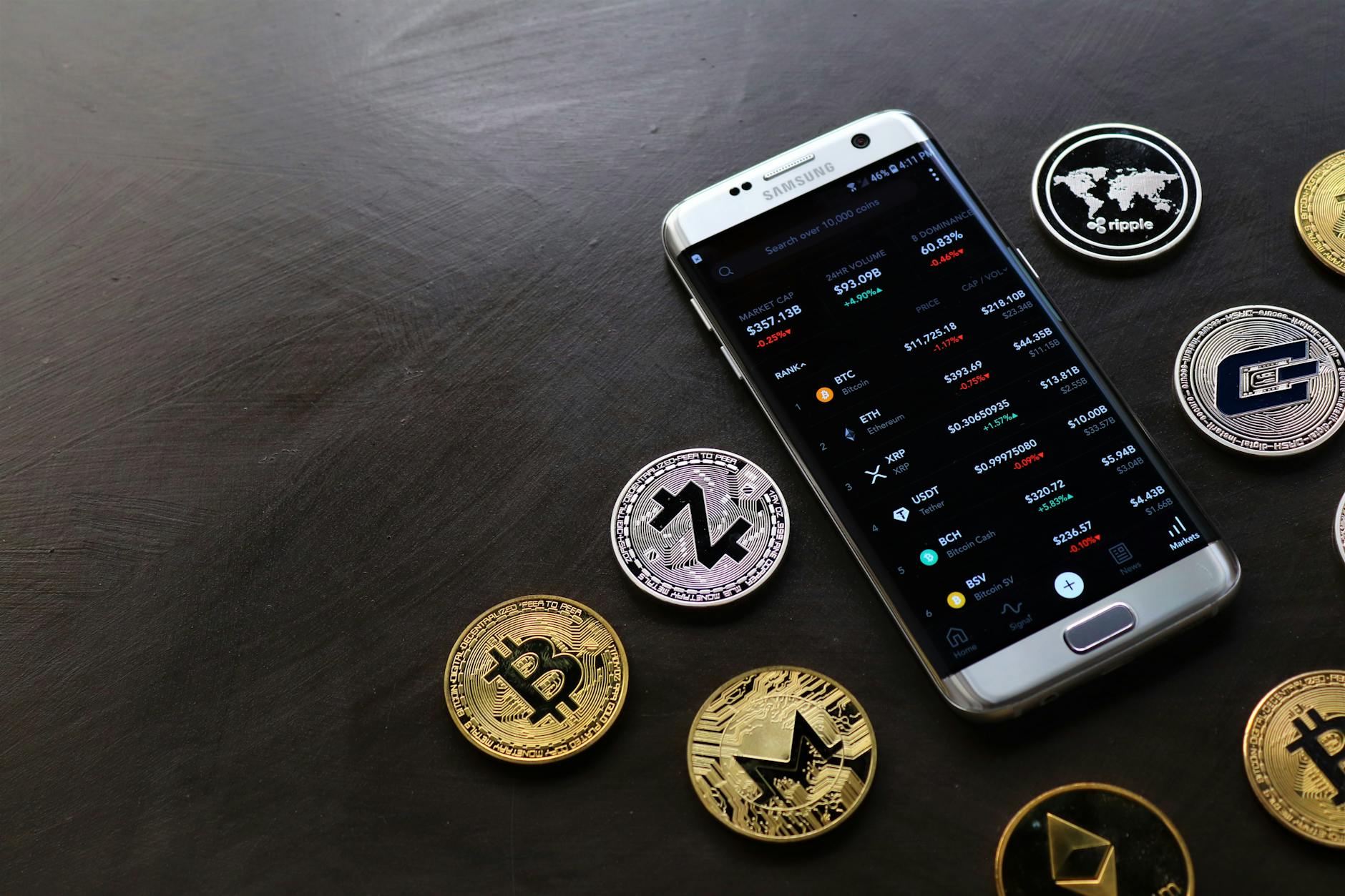 Photo by Roger Brown
So when I don’t see a Coinbase trading pair for PTGC, I don’t take it as proof the token is good or bad. I take it as a sign that Coinbase hasn’t listed it for trading. As of March 2026, I also haven’t seen credible, recent listing announcements saying a Coinbase listing is on the way.
A price page can be like a scoreboard. It shows the score, but it doesn’t mean you can join the game on that field.
The practical takeaway for me as a buyer
For me, the takeaway is simple: there’s no straightforward Coinbase purchase path today for Grays Currency. If I’m set on buying it, I have two realistic choices. I can wait for a real Coinbase listing (a true Buy and Sell screen with a trading pair), or I can use other routes that already support PTGC markets or on-chain swaps on PulseChain.
Waiting is underrated. I treat it like waiting for a minor injury to calm down before speed work. If the path isn’t clear, forcing it usually backfires.
If I do go outside Coinbase, I keep my guard up, because confusion is where scams thrive. Here’s my quick “don’t do this” list:
- Don’t send crypto to random addresses someone posts in a comment or DM, even if they sound confident.
- Don’t buy lookalike tokens with similar names or tickers without verifying the exact network and contract details from official sources.
- Don’t rush because of FOMO. Urgency is a classic scam tool, and it also leads to sloppy clicks.
My goal stays the same every time: protect my funds first, then worry about convenience. If Coinbase ever adds a real listing, I’ll happily take the simpler on-ramp. Until then, I stick with routes that are clear, verifiable, and boring enough to be safe.
Learn More About the PTGC Crypto Coin Here
My two easiest ways to buy Grays Currency without Coinbase
When people search how to buy the Grays Currency on Coinbase, what they usually want is a simple checkout. Since that clean Coinbase path still is not there, I stick to two routes that feel like picking a training plan.
One is guided and beginner-friendly, like a steady base run you can repeat. The other gives me more control, like writing my own workouts, but it also means I’m responsible for every step.
Option A, the beginner route: buying PTGC on Phemex
If I want the fewest steps, I use Phemex. As of March 2026, PTGC is available on Phemex, and the PTGC/USDT market exists. That matters because it means I can trade instead of hunting for a workaround.
Here’s the repeatable routine I follow.
- Create my Phemex account
- I sign up on Phemex with email (or another supported method).
- Then I lock it down right away, because exchanges are big targets.
- Turn on 2FA (two-factor authentication)
- I enable 2FA before I deposit anything.
- This is the crypto version of tying my shoes before a run, basic, not optional.
- Complete ID verification if needed
- Depending on my region and what I’m trying to do (higher limits, certain funding methods), Phemex may ask for ID verification.
- If a feature is blocked, I don’t fight it, I just complete the check and move on.
- Fund my account
- I typically aim to end up with USDT since the pair is PTGC/USDT.
- Funding options can include card, bank transfer, or depositing crypto (what’s available depends on location and the method Phemex offers in my account).
- Find PTGC and open the PTGC/USDT market
- I search for
PTGCinside Phemex. - Then I make sure I’m on the correct market, usually the PTGC/USDT spot market (or their onchain trade area if that’s where they route it).
- I search for
- Buy PTGC with USDT
- For small buys, I prefer a simple market order.
- If liquidity looks thin, I use a limit order so I control my price.
- Decide where I want to hold it
- Keep on Phemex: simplest, but I accept exchange risk.
- Move it out: more steps, but more control. If I withdraw, I triple-check the network and address first.
At a high level, the costs are straightforward: spot trading fees are typically under 1% (Phemex spot fees are commonly around 0.1% per trade), while funding fees vary based on whether I use a card, bank transfer, or a third-party provider. Since fees and screens can change, I always read the final confirmation page before I click buy.
My rule is simple: I start small. If I can’t explain the steps to a friend, I’m not ready to size up.
Option B, the self-custody route: swapping for pTGC on PulseChain
When I want full control, I use self-custody and swap on PulseChain. This route has more steps, but I like knowing the assets sit in my wallet, not on an exchange.
The tradeoff is real though: mistakes are final on-chain. There’s no “cancel order” button if I send funds to the wrong address.
Here’s the flow I keep on a note in my phone.
- Install MetaMask
- I install MetaMask (browser extension or mobile app).
- Then I write down my seed phrase offline. I never store it in email or screenshots.
- Add the PulseChain network
- Network name: PulseChain (any name is fine)
- RPC URL:
https://rpc.pulsechain.com - Chain ID:
369 - Then I save it and switch MetaMask to PulseChain.
- Get PLS for gas
- Every swap needs a bit of PLS to pay transaction fees.
- I make sure I have extra PLS beyond what I think I’ll need, because running out of gas mid-process is annoying.
- Move PLS into my wallet
- I send PLS to my MetaMask PulseChain address.
- Before sending a larger amount, I do a small test transfer first.
- Connect to a PulseChain DEX (like PulseX)
- I open PulseX and connect my MetaMask wallet.
- I confirm my wallet is on the PulseChain network.
- Verify the pTGC contract address
- This is the step I don’t rush, because scam tokens copy names.
- As of March 2026, the pTGC contract address widely referenced is:
0xf5a89a6487d62df5308cdda89c566c5b5ef94c11 - I verify the contract on PulseScan before I swap.
- Approve, then swap
- First I approve the token I’m swapping from (so the DEX can use it).
- Then I run the swap for pTGC.
- I watch slippage and don’t chase price with big orders if liquidity looks thin.
- Verify the transaction on PulseScan
- After it confirms, I open PulseScan and paste my wallet address or transaction hash.
- I check that the token contract matches, and that the swap looks right.
Gas fees on PulseChain are usually low, which I appreciate. Still, low fees don’t protect me from wrong addresses or fake tokens. On this route, careful clicking is the real safety tool.
Learn More About the PTGC Crypto Coin Here
Which option I’d pick based on my comfort level and goals
I treat this choice like training. The best plan is the one I’ll follow without getting sloppy.
If I want fewer steps and less setup, I choose Phemex. It’s like running a well-marked course with volunteers. I can fund, trade PTGC/USDT, and keep everything in one place. That simplicity helps when I’m new, busy, or tired
Here’s my quick decision filter:
- I pick Phemex when I want a repeatable process, fewer wallet details, and less room for a costly typo.
- I pick PulseChain when I’m comfortable using MetaMask, I want my tokens in my own wallet, and I’m ready to verify contract addresses every time.
In a runner mindset, I care about staying in one piece first. So I reduce risk, keep it repeatable, and avoid overcomplicating the first buy. Coinbase may be the clean answer later, but until that changes, these are the two routes I can run without tripping.
Safety checks I do before I buy, during the swap, and after it lands in my wallet
When someone searches how to buy the Grays Currency on Coinbase, they usually want an easy, safe purchase. Since the Coinbase path isn’t clean right now, I treat safety like a pre-race routine. I don’t try to be fast, I try to be consistent.
The biggest mistakes I see come from rushing. A fake link here, a wrong network there, and funds disappear with no “undo.” So I keep a short checklist for before I buy, during the swap, and after the token hits my wallet.
My pre-buy checklist: contract address, network, and where I’m getting info
Before I even think about swapping, I decide what counts as “truth.” For Grays Currency, I start with official project sources for the contract address, then I cross-check it on PulseScan. If the addresses don’t match, I stop.
Here’s what that looks like in real life. I pull up the official Grays Currency site (not a random page from search results), find the contract address, and copy it. Then I paste that address into PulseScan to confirm I’m looking at the real token contract on the right chain (PulseChain). That second step matters because scammers often copy the name and logo, then count on people not checking the contract.
I also avoid “helpful” strangers and don’t trust DMs, even if the account looks legit. I also don’t click “buy now” pages from ads or sketchy search results. If I need a site more than once, I bookmark it and use the bookmark next time.
To keep it simple, this is my pre-buy warm-up:
- Official source first: I only copy the contract address from the project’s real website.
- PulseScan cross-check: I paste the address into PulseScan and confirm it’s on PulseChain.
- Network confirmed: My wallet network must match the token’s network before I do anything.
- No DM links: I ignore “support” messages and random offers to walk me through it.
- Bookmark the real sites: If I can’t find it again from my bookmarks, I slow down.
If I feel rushed, I assume someone is trying to make me sloppy. I pause and re-check.
The two biggest ways people lose funds: wrong network and bad approvals
Most losses I’ve seen aren’t from “advanced hacks.” They’re from basic errors that happen when people try to move too fast.
First, there’s the wrong network problem. Crypto assets can share similar tickers across chains, and wallets can show you options that look close enough. If I send a token on the wrong chain, it might never show up where I expect. Even worse, I might send it to an address that can’t receive it on that network.
This matters for Grays Currency because you’ll see TGC, pTGC, and PTGC used in different places. I don’t treat those as interchangeable. Before I swap or withdraw, I verify the exact version I’m buying and the chain it lives on. If the exchange or DEX shows multiple “versions,” I match it to the contract address I already verified.
Second, there’s the bad approvals problem. On-chain swaps often require an approval before a contract can spend your token. That’s normal. The danger comes when I approve unlimited spend to a contract I don’t trust, or when I approve the right token but to the wrong contract.
My rule is to treat approvals like handing someone a key. If I give unlimited access to a shady contract, it’s like leaving my front door unlocked and hoping nothing happens.
During swaps
- I only approve tokens when I’m about to swap.
- If my wallet lets me set a smaller approval amount, I consider doing that.
- After I’m done, I later review token approvals and revoke anything I don’t recognize or no longer need.
I’m not trying to micromanage every permission daily. Still, if I’ve interacted with a new DEX, a new token, or a new contract, I make a point to check approvals within a day or two. It’s the cooldown lap that prevents next week’s injury.
Learn More About the PTGC Crypto Coin Here
Storage choices: leaving it on an exchange vs moving to a wallet
Where I store PTGC (or any token) depends on what I can protect today. There’s no perfect choice, just tradeoffs.
An exchange is convenient. Password reset exists, support exists, and I don’t have to guard a seed phrase. On the other hand, it’s not fully under my control. If an exchange freezes withdrawals, gets hacked, or locks my account, I’m stuck waiting.
Self-custody is the opposite. When I move tokens to my own wallet, I control them. No one can “pause” my access. The catch is simple and harsh, if I lose my seed phrase, nobody can recover it for me.
When I do self-custody, seed phrase safety is non-negotiable:
- I write it down on paper (or store it on a dedicated metal backup).
- I never share it, not with “support,” not with friends, not with anyone.
- I don’t store it in screenshots or cloud notes, even “just for a minute.”
My simple rule is this: if I can’t secure a seed phrase properly, I only keep a small amount in self-custody. In that phase, I’d rather hold most of it on a reputable exchange with strong account security than pretend I’m set up for self-custody when I’m not.
In other words, I don’t try to run a marathon in brand-new shoes. I earn the right to scale up by getting the basics right first.
Costs, taxes, and expectations so I don’t get surprised later
When I’m searching how to buy the Grays Currency on Coinbase, I’m usually hoping for a clean, predictable checkout. Since I often end up using an exchange like Phemex or swapping on PulseChain instead, I plan for a few moving parts: trading fees, funding fees, on-chain gas, and the token’s own trade tax. If I price it in upfront, I stay calm and avoid panic moves later.
Fees I might pay (and where they show up)
First, I separate exchange costs from on-chain costs. They can stack, especially if I buy on an exchange, withdraw, then swap again on a DEX.
On a centralized exchange, I watch for:
- Trading fees: On Phemex spot, fees are commonly 0.1% per trade. If I buy $100 worth of PTGC, the trading fee is about $0.10. If I later sell $100 worth, that can be another $0.10.
- Funding fees: Card buys often have extra costs that show up at checkout. Bank transfers can be cheaper, but they can take longer. I treat the final confirmation screen like the label on a gel packet, I read it before I swallow it.
- Withdrawal fees: These vary by coin and network. I always check the withdrawal page before I move anything out.
On a DEX (like PulseX on PulseChain), the costs feel different:
- Swap fees: Most DEXes charge a small fee built into the trade. You don’t always see it as a line item, because it’s part of the math.
- Gas fees in PLS: Each on-chain action needs PLS. The nice part is that PulseChain gas is often extremely cheap (often under 0.01 PLS for a basic action). Still, I keep extra PLS in my wallet, because approvals and swaps both need gas.
Two hidden costs matter as much as the posted fees:
Spreads and slippage. When price moves fast, the “expected” price and the “filled” price can differ. Thin liquidity makes this worse. So if I try to swap $1,000 on a small pool, I might get fewer tokens than the quote suggested, even if gas is basically free.
A simple way I sanity-check a trade is to do a small test first. If the result looks clean, I size up.
Low gas doesn’t mean low risk. It just means the network fee isn’t the main problem.
Understanding the built-in burn and trade tax before I hit buy
Some tokens bake their own costs into every transaction. Grays Currency (often seen as pTGC on PulseChain) is commonly described as having a 5% transaction tax on buys and sells. In plain terms, if I swap into pTGC, I should expect the amount I receive to be lower than the pre-tax quote.
The project also promotes an automatic burn mechanic, which sends some tokens to a dead wallet so they can’t be sold again. Over time, that reduces supply. That design can change how people trade, because frequent buying and selling means paying that tax repeatedly.
None of this guarantees price direction. It only changes the math and the feel. I treat it like running into a headwind. It doesn’t stop the run, but I plan pacing around it.
Simple tax and recordkeeping habits that save stress
I don’t try to track crypto taxes perfectly in my head. I track them like training. One simple log, updated after each session, saves me later.
For US taxes, the big idea is capital gains. If I sell crypto for more than my cost, that profit may be taxable. Swapping one token for another can also count as a taxable event. Rules vary by situation and state, so I keep it general and ask a tax pro when I’m unsure.
Here’s what I capture each time I buy, sell, bridge, or swap:
- Date and time
- What I did (buy, sell, swap, transfer)
- Token amounts (in and out)
- USD value at the time (what the platform shows, or what I can document)
- All fees (trading fee, gas in PLS, and any swap costs I can see)
- Transaction hash (especially for on-chain swaps)
- Screenshots of confirmations (exchange receipts, wallet confirmations)
When I do this, tax time feels more like reviewing a training block. Without it, I’m guessing from memory, and that’s when stress spikes. If you want extra peace of mind, a CPA or enrolled agent who understands crypto can help you match your records to the rules.
Conclusion
Right now, how to buy the Grays Currency on Coinbase has a simple answer: as of March 2026, I can’t, because Grays Currency (TGC, also shown as pTGC or PTGC) isn’t listed for trading on Coinbase. Coinbase may show a PTGC price page, but that’s different from having a real market, a trading pair, and a working Buy button.
So I stick to two paths that I can actually execute. First, if I want the simplest flow, I use an exchange route like Phemex and buy PTGC through the PTGC/USDT market, then decide whether I’ll hold on the exchange or withdraw. Second, if I want self-custody, I swap on a PulseChain DEX (like PulseX) for pTGC, using a wallet like MetaMask and paying gas in PLS.
No matter which route I take, I repeat the same three safety rules every time. I verify the contract from official sources and cross-check it on PulseScan. Next, I use the right network (PulseChain), because a wrong network mistake can cost me funds. Finally, I protect my seed phrase, I never share it, never screenshot it, and never type it into random sites.
My next step stays boring on purpose: I start with a small test amount, confirm everything lands correctly, then scale up only after I’m using official links and verified addresses. Thanks for reading, if you’ve found a clean, verified workflow for PTGC, share what worked for you.
Back to How Much Money Do You Need to Start Crypto Trading
Are you looking for better ways and tools to build your monthly revenue and brand? Be sure to check out our other resources located here to speed up the process.
Nathan
Dr. Nathan Pennington, DBA, earned his Doctor of Business Administration degree from the University of Missouri-St. Louis and brings over 15 years of online entrepreneurial experience in helping people learn how to blog, earn income online and build passive income streams outside of what the school system teaches.