
How to Build Multiple Streams of Income
Depending on one paycheck, or worse, one client, can feel like walking a tightrope with no net. I’ve been there, one slow week can turn into stress, rushed decisions, and saying yes to work that drains you. That pressure is exactly why I care about building multiple streams of income.
When I say multiple streams of income, I mean having more than one way money comes in, so your bills don’t depend on a single source. It’s not about overnight wins or flashy “quit your job” promises. It’s about stacking simple income sources step by step, in a way you can actually keep up with.
In this post, I’ll break down the approach I use to build new income without burning out: how I pick the right stream for my schedule and skills, how I set a realistic income target (and timeline), how I start with low-cost options, how I fit the work into my week, how I track what’s working, and how I scale one stream at a time instead of juggling ten.
If you want concrete ideas for starting points, I also share digital marketing side hustles, since that’s where I’ve seen the most flexible options. My mission and values stem from a strong desire to help others get involved in entrepreneurship and find freedom from debt.
Back to How to Blog and Make Money
Multiple streams of income, explained in plain English
When I talk about multiple streams of income, I’m not talking about random, one-off cash. I mean repeatable ways money comes in, so I’m not stuck depending on one employer, one client, or one platform.
Here’s my simple rule: an income stream should have a “next time” built into it. A one-time garage sale isn’t a stream. Selling a service, product, or asset that can earn again next week (without reinventing everything) is.
A realistic mix can look like this:
- A day job that covers the basics
- Freelancing for extra cash and skill-building
- A small digital product that sells while I’m off the clock
- Dividends from long-term investing (slow at first, helpful over time)
Active income vs passive income, and the truth in the middle
Active income is money I earn when I show up and do the work. Think: my job, driving deliveries, freelancing, coaching, or trading hours for a project fee.
Passive income is money that can keep coming in after the setup. Think: dividends, interest, or a digital product that sells without me being on a call.
The truth is that most “passive” streams are really upfront-heavy. They still need maintenance, too. For example, affiliate content can earn while I sleep, but only if I update links, refresh old posts, and keep up with what people search for. A course can sell in the background, but students still email questions, and refunds still happen.
A quick 90-day example of a “hybrid” stream (mine looked a lot like this):
- Days 1 to 30: I picked one problem I could solve, then wrote a handful of helpful posts and added affiliate links where they truly fit.
- Days 31 to 60: I improved what was already live, updated headlines, added simple comparison sections, and answered common questions. Traffic started to trickle in.
- Days 61 to 90: I kept the same schedule, but shifted to maintenance and small upgrades. A few pages began earning weekly, but I still checked links and refreshed info.
That middle ground is normal. If you want a deeper breakdown of how active and passive income differ, check out our check out my money management guides.
More Income Generating Tips You May Be Interested In
Work From Home & Remote Jobs
Gotranscript Review | Earn Cash While Typing
Work from Home Jobs for Stay at Home Moms
20 Virtual Assistant Jobs for Moms
How to Become a Virtual Assistant From the Ground Up
Online Jobs for Beginners: Top Platforms for Legit Remote Work
10 Best Work From Home Opportunities for Beginners
Proofreading Jobs from Home No Experience
7 Entry Level Remote Jobs No Degree Required
Transcription jobs for beginners: Kickstart Your Freelance Career
7 Legitimate Data Entry Jobs From Home
Online Jobs for Students
Online Part Time Jobs for Students without Investment | 20 Top Picks
Free Online Jobs for Students Without Investment
10 Best Online Jobs for College Students
7 Online Jobs for College Students to Earn Money
15 Dirty Ways to Make Money Online
10 Simple Ways to Make Extra Money
12 Easy Ways to Make Money Online For Beginners
10 Part Time Jobs for High Schoolers
How to Make Money as a Student Starting Today
How Can We Earn Money From Home
How to Earn Money From Home
Jobs for Parents & Families
20 Careers for Stay at Home Dads to Earn More
11 Jobs Where You Can Bring Your Child to Work
Side Hustles & Extra Income
25 Things to Buy and Sell for Profit
10 Profitable Part Time Jobs From Home To Start
How to Make Extra Income A Realistic Guide for Beginners
7 Proven Ways for How to Get $200 Fast
Selling Items for Cash
Best Place to Sell Baseball Cards | 15 of Our Best Picks
Best Place to Sell Jewelry Near Me | Our Top 10 Picks
Where Can I Sell My Coins
5 Places That Buy Furniture Near Me
9 Places to Sell Used Tires and Earn More Money
Where to Sell Used Tires for Cash
10 Top Places to Sell Used Appliances for Money
Cash for Gold Near Me Tips
Best Place to Sell Gold Near Me
Where to Sell Used Toys
Where to Sell Used Legos
Gift Cards & Rewards
10 Methods to Get a Tesco Gift Card
14 Ways to Win Amazon Gift Card
7 Ways to Get a Free McDonalds Gift Card
10 Ways to Sell Gift Cards Online Instantly
Passive Income & Business Ideas
5 Best Residual Income Examples to Earn
20 Businesses That Run Themselves for Residual Income
Best Passive Income Ideas: Your Guide to Financial Freedom
Starting an Online Business with No Money
How to Start Affiliate Marketing: A Practical Guide for Beginners
How to Find Profitable Niche
Online Business & Selling Online
10 Ways to Sell Printable Art Online
Investing & Finance Apps
12 Best Stock Trading Apps for Beginners
Education & Make Money Programs
5 Online Colleges That Pay You to Attend
Travel Rewards & Points
Marriott Bonvoy Points Value – Pros and Cons
The three traits every good income stream should have
I don’t chase every idea anymore. I look for three traits that keep a stream from turning into a second full-time job.
- Demand: People already want it and pay for it.
- Delivery: I can fulfill it with my current time, skills, and tools.
- Repeatability: I can sell it again without starting from scratch.
When I’m deciding between ideas, I rate each one from 1 to 5:
- Demand (1 to 5): Do people search for it, ask for it, or buy it already?
- Delivery (1 to 5): Can I deliver without chaos, refunds, or missed deadlines?
- Repeatability (1 to 5): Can I repeat the process next month with the same effort?
If an idea doesn’t score at least a 4 in two categories, I either adjust it or skip it. That’s how I avoid building “streams” that are really just stress with a price tag. If you need a menu of options to score, my list of ways to make $1000 extra a month can help you brainstorm.
Common myths that waste time and money
A few myths show up every time people start thinking about multiple income streams. I’ve believed some of these myself, and they cost me time.
Myth 1: “Passive means no work.”
Passive doesn’t mean effort-free. It usually means less effort later. Even rental properties and dividends have trade-offs, and “hands-off” often means you paid for help.
Myth 2: “More streams always means more money.”
More streams can also mean more logins, more admin, and more half-finished projects. I’d rather build one stream to “steady,” then add the next. Two strong streams beat six weak ones.
Myth 3: “I need a big audience first.”
I don’t. I need the right offer, a clear problem, and a simple way to reach buyers. An audience helps, but it’s not step one. Start with something you can sell and deliver now, then earn attention as you go.
Start with a stable base, so your new income doesn’t wreck your life
When I first started building multiple streams of income, I made a mistake that cost me months: I tried to stack new income on top of a messy life. Late bills, no plan for taxes, and random work hours turned “extra money” into extra stress.
Now I start with stability. Not perfection, just a base that can hold the weight of a new stream. Think of it like adding a room to your house, you don’t start with the paint color. You start by checking the foundation.
Pick your baseline number, the monthly amount you want to replace
My first target is almost never “quit my job.” I pick a number that changes my month without changing my life, usually $300 to $1,000. That range is big enough to matter, but small enough to hit without living on caffeine and panic.
Here’s how I choose it: I look for one pain point I want to cover consistently. For example, groceries, a car payment, or minimum debt payments. If you’re unsure where to start, my guide on ways to make $1000 extra a month can help you match the number to real options.
Then I do the part people skip: I plan for net, not gross. Gross is what the platform or client pays. Net is what I keep after the stuff that quietly eats your profits.
That “stuff” usually includes:
- Taxes (especially with 1099 income)
- Platform fees (marketplaces, payment processors)
- Refunds and chargebacks (common with products and services)
- Basic expenses (software, supplies, mileage, internet upgrades)
A simple example in words: if I want $500 extra per month in my pocket, I don’t aim to “make $500.” I assume some money will go to taxes and fees, so I might target closer to $650 to $750 collected. If I’m selling something with refunds, I build in a little extra cushion. If I don’t need it, great, it becomes savings.
For the tax side, I keep it basic at first: I set aside a percentage of every payout in a separate account.
If I can’t explain my monthly target in one sentence, it’s too complicated for a first stream.
Protect your runway: debt, bills, and an emergency fund
High-interest debt makes side hustles harder because it acts like a leak in your bucket. You can hustle all weekend, then watch the gains vanish into interest. That said, I don’t shame anyone for having debt. A lot of people got there through survival, not “bad choices.”
What I do recommend is protecting your runway before you push growth. My “minimum plan” looks like this:
- Cover the basics first: rent or mortgage, utilities, food, insurance, transportation.
- Pay minimums on everything: stay current so stress doesn’t spike.
- Automate a small emergency fund: even $25 per week builds momentum.
- Then build the stream: put extra income toward the highest-interest debt or savings, based on your situation.
That tiny emergency fund matters more than people think. It keeps a flat tire from turning into a credit card problem, and it keeps you from quitting your side hustle the first time life gets loud.
Most importantly, safety changes your behavior. When I know my bills are covered and I have even a small cushion, I take smarter risks. I negotiate rates and test ideas. I stick with the plan long enough to see results.
Time is the real startup cost
Money is rarely the real blocker. Time is. If I’m working a full-time job, I can’t “find time.” I have to assign time, then defend it.
My starter rule is simple: I choose one weekly time block I can protect for at least eight weeks. If I can’t protect it, I shrink it until I can. Consistency beats ambition here.
A realistic sample week (about 5 hours total):
- Tuesday 7:00 to 8:00 pm: outreach or applications (clients, gigs, proposals)
- Thursday 7:00 to 8:00 pm: delivery (client work, listing, writing, editing)
- Saturday 9:00 am to 12:00 pm: build session (the main work that moves the stream forward)
I also batch tasks so my brain doesn’t switch gears all night. One session is for setup, one is for shipping work, one is for admin. On weekdays, I keep my phone in another room and set a timer, because scrolling turns “a quick break” into losing the whole hour.
If you’re trying to create multiple streams of income, this is the trap to avoid: starting three streams at once. I pick one main stream first, get it to “steady,” then add the next. That’s how I make progress without burning out.
The best first income streams for beginners (ranked by speed to cash)
When I’m starting a new stream, I care about one thing first: how fast it turns into real cash. Not “someday” money, not vanity metrics, not a project that needs six months of setup. Speed matters because early wins create momentum, and momentum is what makes multiple streams of income feel doable instead of draining.
My rule is simple: I pick one primary stream to start, then I add a second only after the first feels stable. If I try to build four at once, I don’t build any, I just collect stress.
Fastest: services and freelancing you can sell this week
If I need money quickly, I start with services because the “inventory” is my skill and time. Writing, design, bookkeeping, editing, social media help, and local services (yard work, junk removal, cleaning, pet sitting) can all pay within days if I keep the offer simple.
For a first offer, I “productize” it so it’s easy to buy. Instead of “I do social media,” I’ll sell “12 captions + 12 Canva-style post ideas for one month.” The clearer the outcome, the faster someone says yes.
Here’s how I price the first version without overthinking:
- I pick a starter package that takes me 2 to 4 hours.
- I set a price that feels slightly uncomfortable but still fair, often $100 to $300 for beginners, depending on the skill.
- I add one upgrade (for example, “rush delivery in 48 hours” or “add two revisions”) so I can raise my average order without rewriting everything.
Use a repeatable loop
- Start with warm leads: past coworkers, friends, local business owners I already buy from. I send a direct note with one offer and one result.
- Post where people already trust me: a local Facebook group, Nextdoor, or a niche community. One post, one service, one clear price.
- Apply on beginner-friendly platforms: I set up profiles and pitch only projects that match my exact deliverable. This list of best freelance websites for bginners helps if you need a starting point.
Scope creep is what turns a good side hustle into burnout. So I put boundaries in writing, even for small jobs. My basic guardrails look like this:
- Deliverables: what they get (number of pages, posts, hours, or files)
- Timeline: due date and what I need from them
- Revisions: one round included, extra rounds cost extra
- Out-of-scope: anything not listed becomes a new quote
If the deliverable doesn’t fit in a sentence, it’s too big for my first offer.
Medium speed: selling products without building a brand from scratch
Products can pay fast, but they usually take longer than services because of photos, listings, shipping, and customer messages. The upside is you’re not selling your hours in the same way.
The easiest beginner paths I’ve seen work are:
Reselling (quick flips)
I focus on items with clear demand and easy shipping: small electronics, calculators, board games, brand-name clothes, niche hobby gear. The key is buying low enough that fees and shipping don’t eat me alive. Before I buy, I estimate: sale price minus marketplace fees minus shipping minus packaging. If the margin isn’t worth it, I pass.
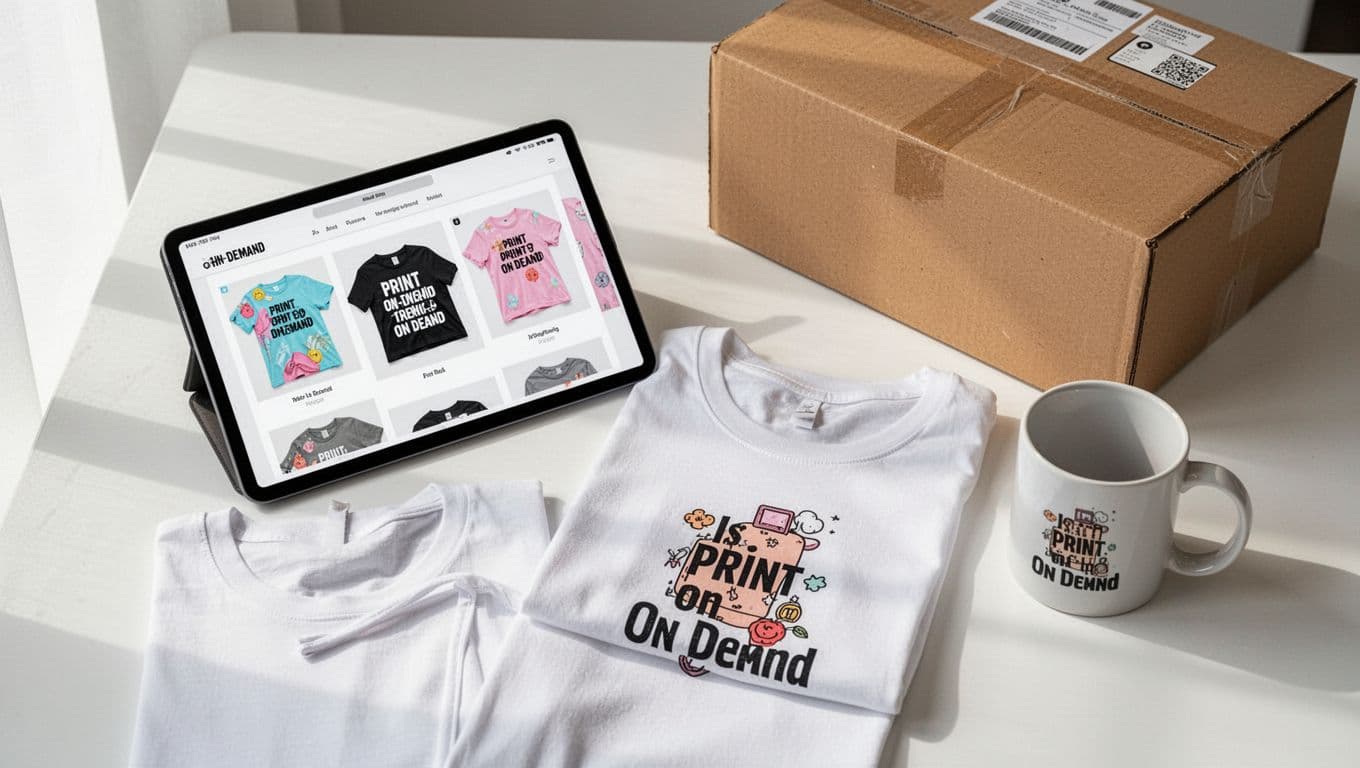
Print-on-demand (no inventory)
POD is slower at first because you need designs and listings, but you don’t store product. Your profit is the spread between your sale price and the base cost. Shipping time matters here because it affects reviews. I keep customer service simple and set expectations in the listing (production time plus shipping time).
Simple handmade or curated bundles
Bundles work because they feel like a solution, not a random item. Think “new puppy starter kit” (curated toys, treat pouch, waste bag holder) or “college desk essentials.” I start tiny, test demand, then build up.
One warning I take seriously: inventory is not the same as progress. It’s tempting to overbuy because it feels productive. Instead, I set a rule that I only restock after I sell through a small batch and can prove the margin works.
Slower but scalable: content that earns while you sleep (sometimes)
Content is slower to cash, but it’s one of my favorite long-term plays for multiple streams of income because one good asset can keep paying in small amounts for a long time. The trade-off is patience and consistency.
At a high level, content makes money in four main ways:
- Ads: you earn based on views (usually meaningful only after steady traffic).
- Affiliate links: you earn a commission when readers or viewers buy through your link.
- Sponsorships: brands pay for a mention, review, or placement.
- Your own products: templates, coaching, courses, or downloads.
I set realistic timelines so I don’t quit too early. Blogging and YouTube often take months before they feel “alive.” Podcasts can take even longer unless you already have distribution. That’s why I pick one format I can stick with. If you’re deciding between writing and video, my breakdown of blog vs vlog can help you match the option to your personality and schedule.
Content income isn’t passive at the start. It becomes lighter only after you build a library.
Underrated: one small digital product that solves one annoying problem
If I want a stream that’s scalable but still beginner-friendly, I build one small digital product. Not a giant course. Not a 200-page ebook. Something tight that fixes a specific headache.
Examples that work well:
- A template (budget sheet, client onboarding email, social media caption bank)
- A checklist (closing checklist for a small business, moving checklist, weeknight meal plan)
- A mini-guide (10 pages that walk through one process)
- A short course (60 minutes total, focused on one result)
Validation is where beginners usually skip the line, then wonder why they don’t sell. I validate by selling to a small group first, even 5 to 20 people, then improving it based on real questions. If nobody buys, I don’t “market harder,” I fix the offer.
I also set simple policies upfront so I don’t create a support job:
- Refunds: a clear window (for example, 7 or 14 days) and clear conditions.
- Support boundaries: email support for product issues, not unlimited coaching.
- Updates: I promise minor fixes, not lifetime customizations.
When this works, it’s one of the cleanest ways I know to add to my multiple streams of income without adding weekly meetings to my calendar.
How I choose the right mix, match your skills, risk, and goals
When I build multiple streams of income, I don’t start by asking, “What’s trending?” I start by asking, “What can I actually sustain?” The right mix depends on my current resources, how much risk I can handle, and whether I’ll still like the work after the “new project” energy fades.
To keep it simple, I use three filters: a quick triangle check (skill, time, money), a three-layer stack (primary, backup, long-term), and stop-loss rules (clear pivot points). That combo helps me choose 2 to 4 streams over time without turning my calendar into chaos.
Use the Skill, Time, Money triangle to filter ideas
Every income idea pulls from the same three buckets: skill, time, and money. I can be short on one or even two, but not all three. When I try, that’s when burnout shows up.

Here’s how I decide what to do based on what I don’t have right now:
- If I lack money, I use skills and sweat equity. I pick ideas with low startup costs and fast feedback.
Example pairings: freelance writing, bookkeeping, tutoring, basic web design, or local services. If you’re in education, a list like 25 side hustles for teachers can spark options that fit your existing strengths. - If I lack time, I use money or automation. I choose things I can batch, outsource, or run with fewer hours.
Example pairings: dividend investing (slow, hands-off), a simple index fund approach, print-on-demand with a tight design system, or paying for help like a virtual assistant once the numbers work. - If I lack skills, I choose a short learning path. I avoid business models that take months before I can sell.
Example pairings: reselling with a simple pricing rule, delivery apps for quick cash, basic UGC content, or entry-level admin gigs. The goal is to earn while I learn, not “study” forever.
The Numbers
| Filter | Low | Medium | High |
|---|---|---|---|
| Risk level | guaranteed demand, small bets | demand likely, some unknowns | platform or trend-dependent |
| Startup cost | under $100 | $100 to $500 | $500+ or inventory-heavy |
| Learning curve | 1 to 2 weeks | 3 to 8 weeks | 2+ months |
| Enjoyment | I’d quit fast | I can tolerate it | I’d do it anyway |
If the idea scores high risk + high cost + steep learning, I don’t touch it as a new stream. That’s not discipline, it’s self-protection.
Build in layers: one primary stream, one backup, one long-term play
I build income like I build a house. First I pour the foundation, then I add rooms. That’s how I grow multiple streams of income without juggling six half-started projects.
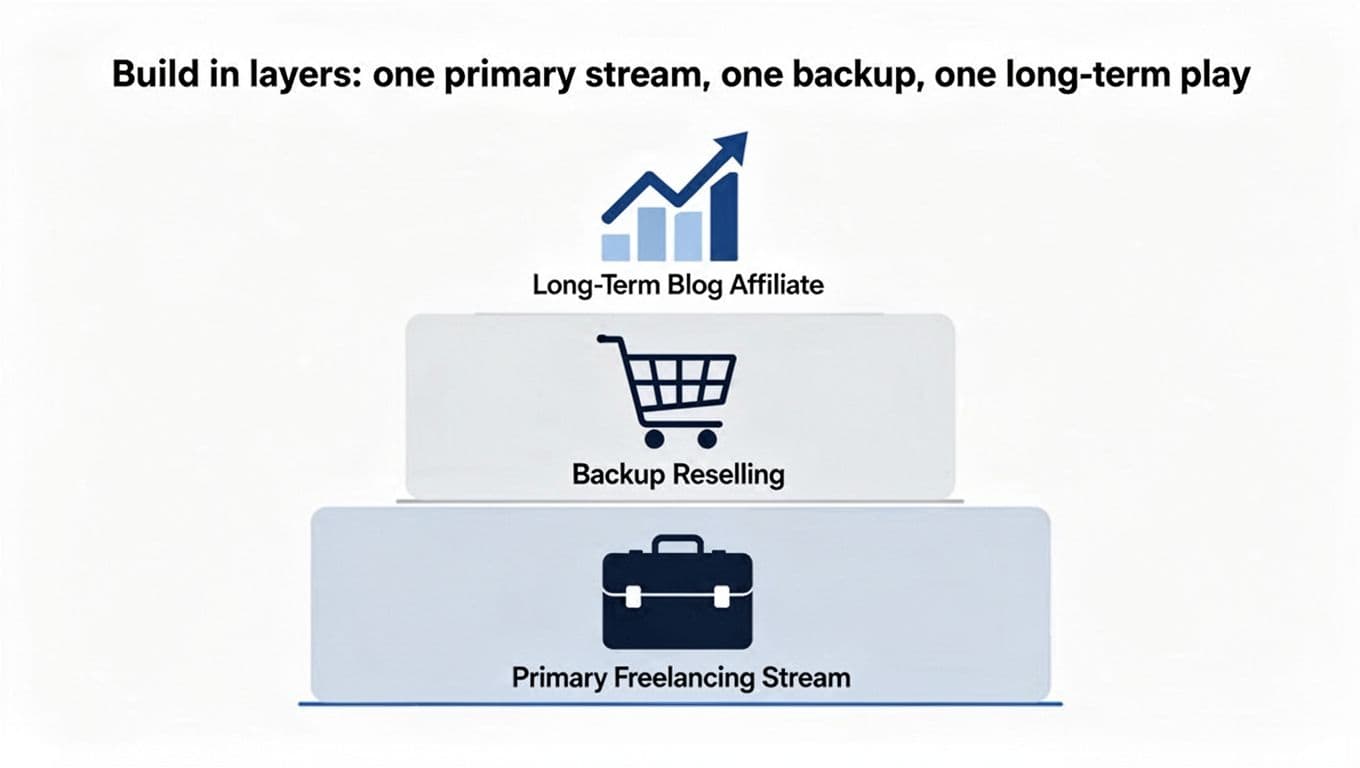
My simple stack looks like this:
- Primary stream (reliable cash): This pays first and reduces stress.
Example: freelancing, a service business, or a consistent part-time role. The “job” of this layer is to create cash flow, not to impress anyone. - Backup stream (flex cash): This is my safety net for slow months.
Example: reselling, weekend gig work, or quick project-based work. The “job” here is quick income when life happens, like a surprise bill or a client who pauses work. - Long-term play (asset building): This is what compounds over time.
Example: blog + affiliate, YouTube, a small digital product, or a newsletter. The “job” of this layer is to turn my effort into an asset that can earn again later.
I don’t try to max out all three at once. I stabilize the primary first, then I add the backup, then I plant the long-term seed.
Each layer has one job. If a stream can’t explain its job, it’s noise.
Set stop-loss rules so you don’t chase bad ideas
Stop-loss rules aren’t just for investing. I use them to protect my time, money, and confidence. The goal is learning fast, not clinging to a plan out of pride.
Here are the rules I actually use (and tweak based on the stream):
- Service stream rule: If I don’t book 10 sales calls in 30 days, I change the offer or niche. I don’t “try harder” with the same message.
- Product stream rule: If profit stays under $100 for 8 weeks, I pivot. That could mean new products, a new platform, or a new pricing floor.
- Content stream rule: If I publish consistently for 12 weeks and traffic is flat, I improve topic choice and headlines, not my posting volume.
- Enjoyment rule (the one people ignore): If I dread the work three weeks in a row, I redesign it or replace it. A stream that makes me miserable is expensive, even if it pays.
When a stop-loss hits, I don’t call it failure. I call it data. I keep what worked, drop what didn’t, and roll that learning into the next test. That’s how I keep building multiple streams of income without getting stuck on one bad bet.
Systems that keep multiple income streams from turning into chaos
When I run multiple streams of income, the work itself is rarely the problem. The problem is the mess around the work, missed numbers, scattered receipts, forgotten follow-ups, and “I’ll do it later” admin that piles up.
So I treat my income like a small operation. I keep one simple dashboard, one paperwork system, and a few automation rules that protect my time. None of this needs fancy software. It just needs to be consistent.
A simple money dashboard I update every week

My weekly dashboard is how I stop guesswork. I don’t “check my bank account” and call it tracking. Instead, I do a quick update once a week, same day, same time, and I keep it tight enough to finish in about 20 minutes.
I track five things, and that’s it:
- Revenue by stream: One line per stream (freelance, reselling, affiliates, digital products, etc.). I use gross numbers first, because it’s the fastest to capture.
- Expenses: Only business expenses, grouped into a few buckets (software, ads, supplies, fees, mileage). If I can’t explain a category fast, it’s too detailed.
- Profit: Revenue minus expenses. This tells me which stream is actually worth my time.
- Hours worked: Total hours per stream. This keeps me honest about “easy money” that quietly eats nights and weekends.
- Next week’s top 3 tasks: The three actions most likely to increase profit, not the three easiest tasks.
To make the dashboard painless, I keep the setup simple:
- Spreadsheet: Google Sheets or Excel works fine. I prefer one tab for weekly totals and one tab for notes.
- Invoicing: Any basic invoicing tool is fine, as long as it shows paid and unpaid. If you need ideas, I keep a short list of options on my recommended business resources for side hustles.
- Password manager: This matters more as streams grow. Fewer logins in your brain means more focus for real work.
If you want a ready-made layout to borrow, you can look at a Notion side hustle income tracker template to see what a clean structure looks like. I still keep mine simpler, but it’s a helpful reference.
The goal of my dashboard isn’t perfect accounting. It’s fast visibility, so I can make a smart decision on Monday.
Taxes and paperwork, set it up once and thank yourself later
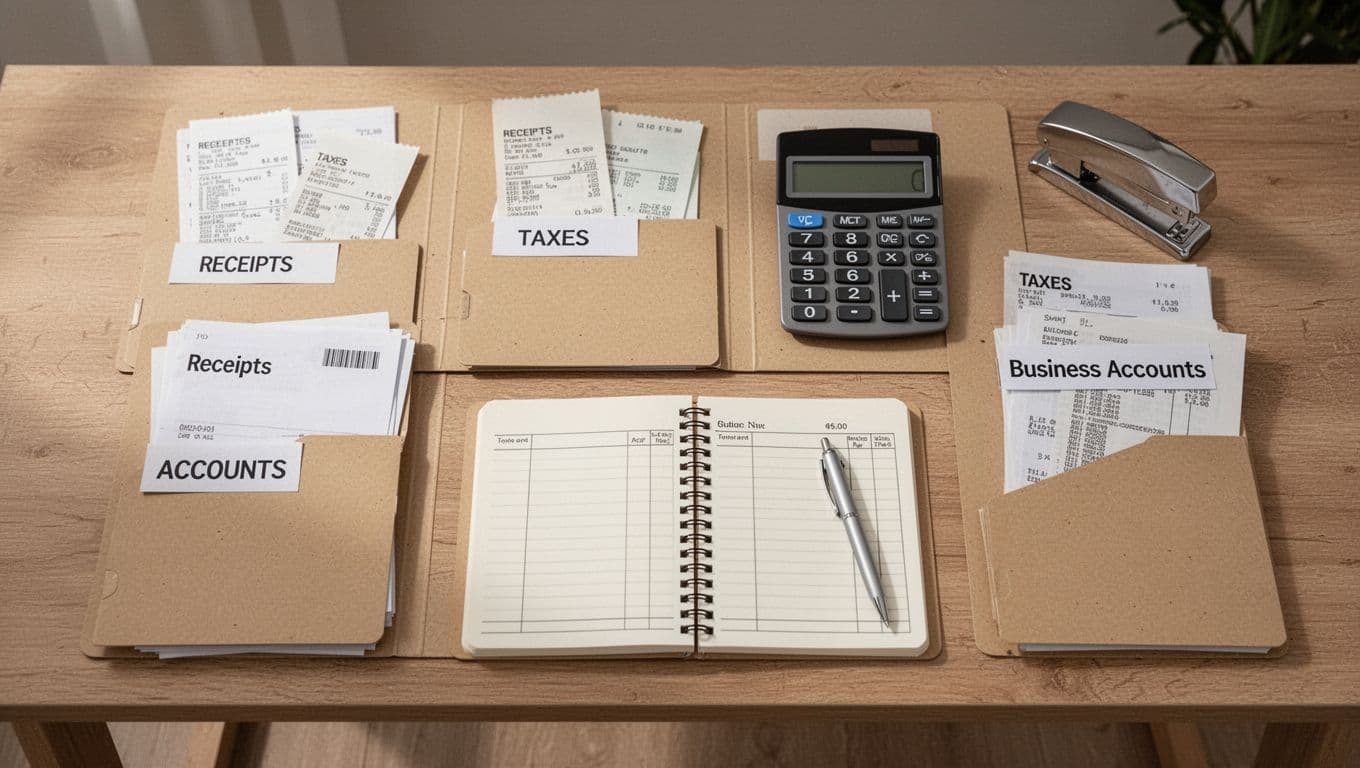
Paperwork gets painful when I pretend it’s optional. The fix is boring, but it works: I set up a simple system once, then I follow it every week.
First, I set aside money for taxes from every payout. I treat it like a non-negotiable expense, not a surprise later. A common approach is parking a percent in a separate account the same day money hits (my percent depends on my situation and total income). If you’re in the US and need a starting point for what “estimated taxes” even means, the IRS self-employed tax center is the most direct place to orient yourself.
Next, I separate accounts so my numbers stay clean:
- One checking account for income and expenses
- One savings account for taxes
- One card for business purchases (even if it’s not a “business credit card” yet)
Finally, I keep receipts in one place. I don’t rely on a shoebox or my email search bar. I use a simple rule: every receipt gets captured the same week. Lastly, I snap a photo, file it in a “Receipts” folder by month, and move on. That’s it.
Because tax rules vary by location and business type, I always research local requirements. As income grows, I also consider hiring a pro. Paying for tax help can be cheaper than paying for mistakes, especially once you start stacking multiple streams of income.
Automation and boundaries that protect your time
I don’t scale by working longer. I scale by removing repeat decisions. Automation helps, but boundaries matter just as much.
I start with templates because they eliminate rework. A few that save me the most time:
- Client intake template: one email that collects what I need up front (scope, deadline, budget).
- Proposal and invoice templates: the same structure every time, so I’m not reinventing pricing language.
- Delivery template: a repeatable checklist for how I finish and hand off work.
Canned replies are another quiet win. If you answer the same questions each week, write the best answer once and reuse it. Zapier’s examples of email canned responses are a good reminder of how much time lives in your inbox.
Scheduling links also protect focus. I avoid “What time works for you?” back-and-forth and offer a few slots instead. That one change keeps my week from turning into a patchwork calendar.
Then I add boundaries that force the system to work:
- Office hours: I pick a small window for messages and admin, and I stop there.
- Response rules: I don’t answer non-urgent messages at night.
- A real “no”: If a task doesn’t fit my current priorities, I decline or delay it.
Saying no is part of building multiple streams of income. If I say yes to everything, I’m not growing, I’m just collecting obligations.
Conclusion
I build multiple streams of income the same way I build any stable system, I keep it simple, I keep it honest, and I keep it moving. The big idea is this: fewer, better streams beat a pile of messy ones, because focus creates results, and results create options. When each stream has a job (reliable cash, flex cash, or long-term assets), I can grow without turning my week into a grind.
Here’s my 30-day roadmap, in four weeks:
Week 1 (Choose): Pick one income stream that fits my time and skills, then set a clear target (for example, $300 net). I commit to one weekly time block and protect it.
Week 2 (Validate): I test demand fast. That means pitching a simple service package, listing a small batch, or offering a tiny digital product to a small group. I aim for proof, not perfection.
Week 3 (Sell): I focus on one repeatable sales action each day (outreach, applications, follow-ups), then I deliver clean work with tight boundaries. That’s how I avoid burnout.
Week 4 (Review): I check profit, hours, and stress. Then I either tighten the offer, raise the floor, or drop it and move on.
Thanks for reading, consistency beats intensity here, and patience is the price of steady income that lasts.
Back to How Can I Become an Entrepreneur