
How to Make Money Online for Beginners

Disclosure: This post may contain affiliate links, meaning if you decide to make a purchase through my links I may earn a commission at no additional cost to you. See my disclosure for more info.
Build A Smarter Online Business
Want to turn your content into traffic, income, and long-term freedom? Start with the guides built to help you grow smarter.
Explore Online Business Guides →Learning how to make money online is a real goal for people everywhere. It is not some far-off dream. This is not about “get rich quick” schemes. It is about building real income. You can use skills you already have or are willing to learn. The trick is finding a path that fits your life and goals.
Back to How Can I Become an Entrepreneur
Understanding the Online Income Landscape
Before you jump in, understand that earning online is not one-size-fits-all. It is an ecosystem of different models. Each has its own timeline, effort level, and potential payoff. For most, the journey starts in one of two ways. You can turn your expertise into a service. Or you can create a digital asset that earns money over time.
This means you need to think like a business owner from the start. You are not just picking up a hobby. You are launching a small business. All those success stories you hear come from people who treated their online work with dedication. They treated it like a traditional 9-to-5 job.
The Core Ways to Earn Online
There are three main ways to build an online income. Each one plays to different strengths and timelines.
- Active Income: This is the most direct model. You trade your time and skills for money, like a regular job. Think freelancing, virtual assistance, or coaching. It is the fastest way to see your first dollar come in.
- Passive Income: Here, you create something once. It could be a blog post, an ebook, or a print-on-demand store. It continues to generate revenue with little active work. It is a longer game, but the potential to scale is huge.
- Hybrid Models: The savviest online entrepreneurs often mix and match. A blogger (passive) might offer one-on-one consulting (active). This blend gives you both immediate cash flow and long-term growth.
This chart gives you a clear picture of how different models are used. They can be a main gig or a side hustle.

As you can see, freelancing and e-commerce often become primary incomes. Content creation is a great way to supplement what you already do.
To help you weigh your options, here is a quick breakdown. It shows what you can expect from popular paths.
Comparing Popular Online Income Models
| Method | Startup Cost | Income Potential | Time to First Dollar |
|---|---|---|---|
| Freelancing | Low ($0 – $200) | $500 – $10,000+/month | 1-4 weeks |
| Blogging/Affiliate | Low ($100 – $500) | $100 – $20,000+/month | 6-12 months |
| Digital Products | Medium ($200 – $1,000) | $200 – $15,000+/month | 1-3 months |
| E-commerce | High ($500 – $5,000+) | $500 – $50,000+/month | 1-2 months |
| Virtual Assistant | Very Low ($0 – $100) | $500 – $5,000+/month | 2-6 weeks |
This table should give you a realistic starting point. Choosing the right model often comes down to time versus money.
Ready To Build More Traffic And Income?
Use Internet of Business to learn blogging, SEO, affiliate marketing, passive income, and digital business systems that compound over time.
Start Building Your Digital Income →The biggest mental shift is to see your online presence as a business asset. It's not just a social one. Every skill you list is a seed for future income. Every piece of content you share is a seed too.
So, ask yourself this question first. Do you need cash flow now? Or can you invest time in building something for the future? Getting clear on that answer is the first step. It helps build a strategy that works. You'll find more ideas in our guide on how to start a side business.
Earn Your First Dollar with Freelancing and Services
If you want to learn how to make money online quickly, sell a skill you have. Freelancing lets you skip the long game of building an audience. You also don't need to create a product from scratch. You can start earning almost right away. Package your expertise into a service that solves a problem for someone.

This approach is perfect for anyone eager to see fast results. There is a market for what you can do. Your background could be in writing, graphic design, or social media. Even being incredibly organized is a marketable skill. The trick is to pinpoint your in-demand skills. Then, position them for a paying client.
Pinpoint Your Most Marketable Skills
First, take an honest look at what you are good at. Many people undervalue their own talents, especially if they are self-taught. Do not just think about your official job description. Consider skills from every part of your life.
Are you the friend everyone asks to proofread an email or résumé? That is a marketable editing skill. Do you easily create eye-catching presentations in Canva or PowerPoint? That is a design service right there.
Here are a few in-demand areas to get you thinking:
- Writing and Editing: Think blog posts, website copy, or email newsletters. Simple proofreading is another option.
- Graphic Design: This could be logos, social media graphics, or marketing brochures.
- Virtual Assistance: Managing schedules, handling emails, and data entry are huge time-savers. Online research is also a valuable service.
- Social Media Management: Small businesses need help creating content and scheduling posts. They also need help engaging with their online community.
- Digital Marketing: You could offer services like basic SEO or running paid ad campaigns. Managing email marketing flows is another option.
Once you have a list, visit freelance platforms. See what others are offering. Pay attention to how top-rated freelancers describe their services. This research helps you frame your skills to attract clients.
Successful freelancers do not just list their skills. They explain the problems their skills solve. A client is not buying "writing services." They are buying compelling website copy that converts visitors.
Building Your Presence on Freelance Platforms
With a service in mind, you need a place to find clients. Freelance marketplaces are the perfect starting point. They are full of people looking to hire. Platforms like Upwork, Fiverr, and Freelancer.com bring customers to you.
Think of your profile as your digital storefront. It needs to be professional and focused on the client. Do not say "I am a good writer." Try something like "I create SEO-optimized blog content." Explain how it helps businesses rank higher on Google. See the difference?
Sending a winning proposal is the next key moment. Generic, copy-pasted proposals are a waste of time. A great one shows you have read the project description. It shows you understand the client’s goals. And it shows you have a clear plan to help them. Keep it brief. Address their specific pain points. Close with a clear next step. Dive deeper in our post about the best freelance websites for beginners.
Pricing Your Services and Managing Clients
Figuring out what to charge is a big hurdle for new freelancers. The most common mistake is pricing too low just to get the job. This devalues your work. It also tends to attract difficult clients.
A good starting point is to browse your chosen platform. See what other freelancers with similar skills are charging. You have a few common models to choose from:
| Pricing Model | Best For | Example |
|---|---|---|
| Hourly Rate | Ongoing projects or tasks where the scope is unclear. | Virtual assistant work, ongoing social media management. |
| Per-Project Fee | Clearly defined projects with a specific outcome. | Designing a logo, writing a 5-page website. |
| Retainer | Clients who need your services consistently each month. | Monthly SEO services, content writing packages. |
After you land that first client, your job shifts. You must deliver fantastic work and communicate clearly. Be professional. Always hit your deadlines. Aim to over-deliver. A happy client is your best marketing tool. They will leave glowing reviews, come back for more, and send referrals. This is how a true freelance career is built.
Build Long-Term Wealth with Content and Affiliate Marketing
Freelancing is a great way to start earning quickly. But the key to long-term wealth is creating assets that work for you. This is where content creation and affiliate marketing come together. They form a powerful duo for a more sustainable income.
Imagine earning money today from a blog post you wrote two years ago. That is the goal here.

This is not about getting rich overnight. It is about building a real business. By creating valuable content, you attract an audience that trusts you. When you recommend relevant products to that audience, you earn commissions. You do this without ever touching inventory or dealing with customer support.
Choosing Your Profitable Niche
Your first decision is picking your niche. It is arguably the most important one. Think of it as the specific corner of the internet you will own. The sweet spot is where your loves, knowledge, and profitable topics meet. Chasing a "profitable" niche you do not care about leads to burnout.
Start by brainstorming. What topics could you talk about for hours? Sustainable gardening? Vintage camera gear? Personal finance for millennials? Write them all down.
Once you have a list, put it to the test:
- Is anyone listening? Use a free keyword tool. See if people are searching for information on your topic.
- Are there products to promote? A quick search on Amazon will tell you if there are affiliate-friendly products.
- What’s your angle? You do not have to be the world's #1 expert. But you need a unique perspective. Instead of a generic "travel" blog, you could create a site about "budget-friendly travel with a toddler."
Launching Your Content Platform
With a niche locked in, you need a home for your content. A self-hosted blog on a platform like WordPress is the gold standard. It gives you total ownership and control. Getting one set up is simple these days. Most web hosts offer one-click installations.
Your first goal should be to publish a small library of "pillar" content. These are your foundational pieces. They are long, helpful articles or videos. They cover the most important topics in your niche. This content will establish your authority. It will also make a great first impression on new visitors.
Understanding Affiliate Marketing Fundamentals
Affiliate marketing turns your content into a revenue stream. It is a performance-based model. You earn a commission for promoting someone else’s products. When a reader clicks your affiliate link and buys something, you get paid.
This whole system is built on trust. Your audience is there for your insights. A product recommendation should feel like it is from a knowledgeable friend. It should not feel like it is from a pushy salesperson.
The opportunity here is massive and growing. The global media and internet advertising market is on track to jump. It will go from $884 billion in 2024 to $1.11 trillion by 2028. This growth fuels platforms that pay creators like you. Paid digital content will hit $750 billion by 2028. Nearly 6.04 billion internet users will be online by 2025. Your potential audience is bigger than ever. You can find more global media trends at Statista.
This guide on Affiliate Marketing for Beginners is a solid place to start.
Integrating Affiliate Links Naturally
After you get approved for affiliate programs, put your links to work. Amazon Associates is a popular starting point. Networks like CJ Affiliate and ShareASale are also good. The key is to add links where they add value. Do not just spray them everywhere.
Here are a few proven ways to do it:
- In-depth Product Reviews: Write an honest, detailed review of a product you have used. Talk about what you liked and what you did not. Explain who it is truly for.
- Comparison Posts: Pit two or three popular products against each other. Help readers make a smart choice by breaking down the differences.
- Tutorials and How-To Guides: Show people how to do something using a specific tool. A food blogger could share a recipe while linking to their stand mixer.
This strategy requires patience. It takes time. But by consistently creating helpful content and earning trust, you build a reliable income. It can pay off for years. To learn more, check out our guide on how to start affiliate marketing.
Tap into the Ecommerce Boom by Selling Products Online
Selling physical products online is more achievable than you might think. You do not need a garage packed with inventory to start. Building an ecommerce brand is a direct line to a global audience. You can do it from your laptop. This puts you in complete control of your business.
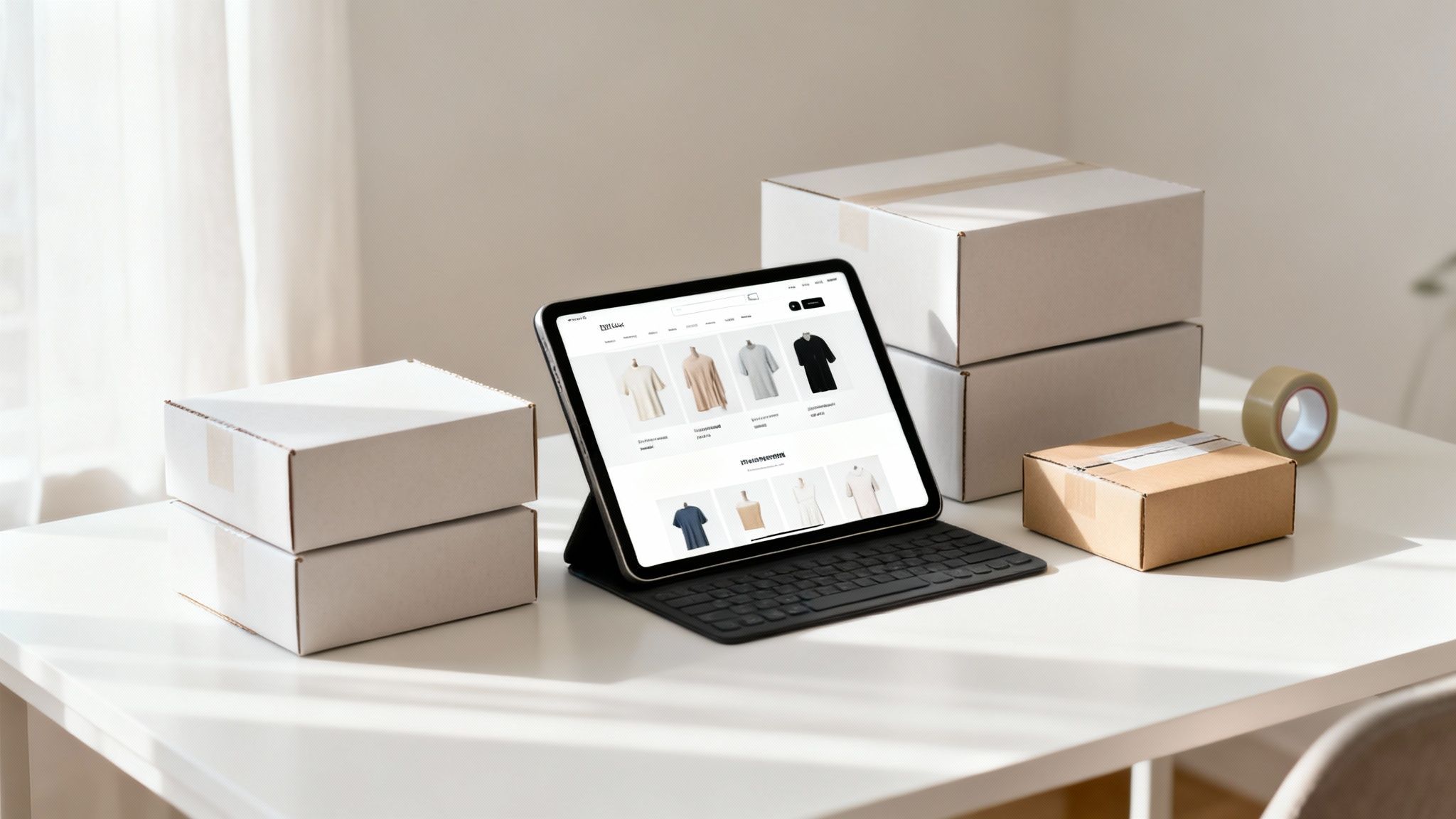
Two of the easiest paths for beginners are dropshipping and print-on-demand. Both models are brilliant. They remove the biggest headaches of traditional retail. You don't have to buy inventory upfront or deal with shipping. Instead, you partner with suppliers who handle the heavy lifting for you.
Picking Your Ecommerce Lane
Your first decision is which model aligns with what you want to build. They sound similar, but they cater to different strengths. Getting this right from the start is half the battle.
Dropshipping is all about selling existing products from a third-party supplier. A customer buys from your site. You pass the order to your supplier. They ship it directly to the customer. You are the curator and marketer. You never touch the product.
Print-on-demand (POD) is a creative twist on this model. You create custom designs for products like t-shirts, mugs, or posters. A third-party company only prints and ships an item after an order comes in.
Here is a quick breakdown to help you decide:
| Feature | Dropshipping | Print-on-Demand |
|---|---|---|
| Product Type | Existing products from various suppliers | Custom-designed apparel, art, and accessories |
| Creative Control | Low (you sell what's available) | High (your designs are the product) |
| Startup Speed | Faster (source and list products) | Slower (requires design work) |
| Best For | Entrepreneurs who excel at marketing and curation | Creators, artists, and brand builders |
If you want to dive deeper into the nuts and bolts, our guide on https://internetofbusiness.net/what-is-dropshipping-and-how-does-it-work/ is a great place to start.
Building Your Digital Storefront
Once you have a business model and a product niche, build your online home. Platforms like Shopify have made this process simple. You can do it even with zero coding experience. They offer templates and handle payment processing. They give you all the tools you need to run the show.
And the opportunity is massive. By 2025, global ecommerce sales will hit $6.86 trillion. Shopify merchants alone have brought in $1.1 trillion in sales. The average store owner pulls in around $67,000 a year. With over 31 million ecommerce sites and 2.8 billion online shoppers, launching a store with no inventory makes sense.
Your product pages are your digital salespeople, so make them count. Every great product page should include:
- High-quality photos from several angles.
- A clear description that focuses on benefits, not just features.
- Easy-to-find pricing and a big, obvious “Add to Cart” button.
- Customer reviews or other forms of social proof as soon as you get them.
Finding a Niche and Suppliers You Can Trust
Your success boils down to two things. You need to sell the right products. And you must work with the right people. A good niche is specific enough to stand out. It still has enough customer demand to be profitable. Do not open a generic “pet store.” Think more like a shop specializing in “eco-friendly dog toys for small breeds.”
Finding reliable suppliers is critical. For dropshipping, many platforms integrate with supplier directories. This makes the process easier. When vetting a potential partner, look for:
- Solid Reviews: What are other sellers saying about them? Are they reliable?
- Realistic Shipping Times: Long delays lead to angry emails and bad reviews.
- Good Communication: You need a partner who responds quickly when problems pop up.
Building an ecommerce brand is less about the products themselves. It is more about the story and experience you create. Your niche, branding, and customer service are what will set you apart.
For anyone serious about this path, exploring the best Shopify apps for dropshipping success can give you a significant advantage.
Getting the Word Out and Making Sales
Okay, your store is live. Now what? You have to get people in the door. The final piece of the puzzle is marketing. You cannot make sales if nobody knows you exist.
My advice? Start with one or two channels you can manage well. A powerful strategy is running targeted ads on social platforms. Facebook or Instagram are good options. You can laser-focus on users based on their interests. This is an efficient way to find your ideal customer.
At the same time, start learning the basics of search engine optimization (SEO). SEO for your product pages is a long game. But it is how you will eventually attract free, consistent traffic from Google searches.
Your Toolkit for Sustainable Online Growth
Choosing your path is just the first step. The real secret to a lasting online income lies in how you manage your day-to-day. This is where we get into the nitty-gritty. We’ll cover the tools, systems, and habits that separate a side hustle from a real business. Getting your operations in order allows you to work smarter, not just harder.
The right software can feel like cloning yourself, especially when you are starting out. You do not need a huge budget, either. Many of the best tools have powerful free plans. They are more than enough to get you off the ground. Think of them as your first digital employees. They handle tedious tasks so you can focus on what grows the business.
Essential Software for Your Online Venture
When building an online business, you are instantly the CEO and marketer. You are also the project manager and customer service rep. Having the right digital tools is not a luxury; it is essential. It helps you stay organized and look professional from day one. These picks are all beginner-friendly. They focus on free or low-cost options that pack a serious punch.
Here is where to start:
Project Management: To keep your sanity, you need a way to visualize your work. A tool like Trello or Asana is perfect for this. You can set up boards for your content calendar. You can also track client projects or map out a product launch. Dragging tasks from a “To-Do” list to “Done” is satisfying. It keeps you from dropping the ball.
Professional Communication: Ditch the personal email address. Set up a professional one (like yourname@yourbusiness.com). This small step adds instant credibility. For marketing, an email service like Mailchimp or MailerLite is non-negotiable. Building an email list is one of the most valuable assets you will ever own. It gives you a direct line to your audience.
Content Creation: You do not need a design degree to create great graphics. Canva is a total game-changer. Its drag-and-drop interface and huge template library make it easy. You can whip up professional social media posts, blog images, or a simple logo.
These tools are the bedrock of your operation. They automate, organize, and professionalize your work. They give you a solid foundation to build upon.
Structuring Your Day for Maximum Productivity
When you are your own boss, your biggest challenge is managing yourself. Without a schedule, distractions can easily creep in. This leaves you feeling swamped by an endless to-do list. The trick is to build routines that protect your time and energy. This ensures you are consistently working on what matters.
One powerful technique is time blocking. It is simple: you divide your day into dedicated blocks of time. Each block is for a single task. For example, 9-11 AM might be “deep work” on a client project. This means no emails and no social media. Then, 11-12 PM is for clearing your inbox. 2-4 PM is for creating content. This approach forces you to stop multitasking. Multitasking is a myth that kills productivity.
The goal is not to work every waking hour. It is to make the hours you work as focused and effective as possible. A well-structured day prevents burnout. It turns this journey into a marathon, not a sprint.
Realistic Goal Setting and Financial Tracking
Your online business needs a destination, or you will just drift. Vague goals like “make more money” are worthless. You cannot measure them. Instead, use the SMART framework. Your goals should be Specific, Measurable, Achievable, Relevant, and Time-bound. So, a fuzzy goal becomes: “Secure two new freelance clients. The average project rate will be $500 each by the end of next month.”
See the difference? That clarity gives you a concrete target. It also gives you a way to know if you are on track. It transforms a dream into a plan.
Finally, you must treat the money like a business from day one. You do not need complex accounting software to start. A simple spreadsheet is all you need.
| Financial Tracking Essentials | Description |
|---|---|
| Income Log | Every time you get paid, log the date, the client or source, and the exact amount. |
| Expense Log | Track every business-related purchase, from software subscriptions to web hosting. |
| Profit/Loss Statement | At the end of each month, subtract your total expenses from your total income. That's your profit. |
This simple habit is critical. It gives you a clear picture of your financial health. It helps you make smarter decisions. It also makes tax time much less painful. This discipline elevates what you are doing from a hobby into a business.
Got Questions? Let’s Clear Things Up
Diving into the world of online income is exciting. Remember, if you are feeling a bit overwhelmed, you are not alone. This is where most people get stuck. They get caught in “analysis paralysis” instead of taking action.
Let’s tackle some of the most common hurdles beginners face. Getting these answers straight will give you the confidence to move forward.
How Much Can I Realistically Earn When I First Start?
This is the million-dollar question, is it not? The honest answer is: it depends entirely on the path you choose.
If you go the freelancing or service route, you can see cash flow quickly. It is not unheard of to land your first client in your first month. You could pocket a few hundred dollars. You are trading a direct skill for money. The feedback loop is fast.
Now, for things like blogging or affiliate marketing, you need to play the long game. Do not expect to quit your job in 90 days. It can easily take 6-12 months of consistent effort. This is just to see your first $100. Your initial goal should not be to replace your salary. It should be something small and tangible. For example, it could be covering your coffee budget for the month.
The secret is to stop chasing the money and start chasing value. When you genuinely focus on helping people solve their problems, the income almost always follows.
What Are the Biggest Mistakes Newcomers Make?
I have seen it a thousand times: “shiny object syndrome.” Someone starts a blog. They get impatient after a month. Then they jump to dropshipping, then to creating a course. You have to give one strategy a real shot. I am talking at least six months of focused work. Only then can you decide if it is working.
Another classic mistake is treating it like a hobby or a lottery ticket. This is a business. It demands real work and a professional attitude. It requires consistency, even when you do not feel like it.
And finally, people forget that creating the “thing” is only half the job.
- Building a fantastic service means nothing if no one knows you exist.
- Writing an amazing blog post is pointless without a promotion strategy.
- You have to learn marketing. Period. You must get your work in front of the right eyeballs.
Do I Really Need to Pay Taxes on My Online Earnings?
Yes. I cannot stress this enough. Every dollar you earn online is income. The government will want its cut. Ignoring this is one of the fastest ways to get into serious trouble.
Here is a simple rule to live by. Immediately set aside 25-30% of every single payment you receive. Put it into a separate savings account just for taxes. Do not touch it.
As an online earner, you are effectively self-employed. That means you are 100% responsible for tracking your income and expenses. Keep meticulous records of everything you spend money on for your business. This includes software, hosting, courses, and ads.
These are usually tax-deductible. They can save you a bundle. Once you are making consistent money, hire a tax professional for an hour. This is the best investment you can make. Trust me on this one.
Back to How Can I Become an Entrepreneur
Are you looking for better ways and tools to build your monthly revenue and brand? Be sure to check out our other resources located here to speed up the process.
Nathan
Dr. Nathan Pennington, DBA, earned his Doctor of Business Administration degree from the University of Missouri-St. Louis and brings over 15 years of online entrepreneurial experience in helping people learn how to blog, earn income online and build passive income streams outside of what the school system teaches.


