
Can I Retire on 500K?

Disclosure: This post may contain affiliate links, meaning if you decide to make a purchase through my links I may earn a commission at no additional cost to you. See my disclosure for more info.
Build A Smarter Online Business
Want to turn your content into traffic, income, and long-term freedom? Start with the guides built to help you grow smarter.
Explore Online Business Guides →Imagine you’ve finally hit that $500k milestone in your retirement savings. You’re picturing lazy mornings, travel dreams, and no more alarm clocks. But then doubt creeps in. Can I retire on 500k?
The short answer is yes, if you live frugally in a low-cost area and plan smart. However, it gets tricky for most people. Average U.S. retirees spend about $62,000 a year in 2026. That covers housing, food, and basics for folks 65 and older.
Your $500k at the 4% safe withdrawal rule spits out $20,000 annually. Add the average Social Security benefit of $25,000, and you’re at $45,000 total. That’s well below average spending. So, for many, it falls short without cuts or side income.
Location changes everything. In affordable spots like Oklahoma, total costs drop to around $52,000 after Social Security. Places such as Mississippi, Kansas, or Alabama keep things under $55,000 yearly. You could make it work there with a modest home and simple habits.
Still, risks loom large. Out-of-pocket healthcare hits $7,800 per year on average. Inflation keeps pushing up groceries, insurance, and travel by double digits for many retirees. Savings needs jumped to $824,000 for comfort this year, while most have just $289,000.
Don’t worry, though. This post breaks it down step by step. We’ll look at real costs by category, like housing and healthcare. Then, we cover strategies to stretch your money, such as part-time work or relocation. You’ll get tools to calculate your own number and build a plan that fits.
By the end, you’ll know if $500k works for you. Or how much more you need. Let’s figure this out together.
Back to Ways to Save Cash
How Far Will $500k Really Stretch? Breaking Down Everyday Retirement Costs
You might wonder, can I retire on 500k if everyday costs add up fast? Most U.S. retirees aged 65 and older spend about $65,000 per year on average. That covers housing, food, healthcare, and transport for a household. Expenses often drop after you stop working because no more commuting or work lunches. However, healthcare spikes as you age.
Ready To Build More Traffic And Income?
Use Internet of Business to learn blogging, SEO, affiliate marketing, passive income, and digital business systems that compound over time.
Start Building Your Digital Income →Your $500k nest egg at the classic 4% rule gives $20,000 in the first year, adjusted for inflation each time. Add average Social Security of $25,000, and you hit $45,000 total income. That’s tight against $65,000 spending. Frugal living under $40,000 yearly total could make it work, especially in cheap areas
Your Annual Budget: What Retirees Actually Spend
Retirees often overspend in key spots. For example, 43% go over budget on property taxes, 37% on medical care, and 34% on transport. Groceries surprise 67% with higher tabs. In low-cost states like Oklahoma, yearly living drops to around $51,000. Mississippi, Kansas, and Alabama stay under $55,000 too.
Here’s a quick breakdown of average retiree household expenses:
| Category | Yearly Average | Common Overspend % |
|---|---|---|
| Housing (rent/mortgage, taxes, maintenance) | $22,000 | 19-43% |
| Food/Groceries | $8,000 | 67% |
| Healthcare | $7,800 | 37% |
| Transport | $6,000 | 34% |
| Other (utilities, insurance) | $21,200 | Varies |
Total: ~$65,000. Think about your coffee habit. That daily $5 latte adds $1,800 yearly. Car repairs hit unexpectedly too. Track your spending now with these steps:
- Log every expense for a month in a simple app.
- Cut non-essentials like subscriptions first.
- Aim for $4,000 monthly now. That’s $48,000 yearly, close but tight with extras.
In short, personalize your budget to match reality.
Safe Withdrawal Rates: Why 4% Might Not Cut It Anymore
The 4% rule worked for 30-year retirements. You take 4% of $500k, or $20,000, in year one. Then adjust up for inflation yearly. It assumes 4-6% real returns after inflation. But longevity means 20-30 years post-65 for many. New studies drop safe rates to 3-3.5% for steady spending and 90% success odds.
Why the change? Inflation pushes costs up quick. High stock prices and low bonds add risk. Volatility hits hard early on, called sequence risk. At 3.5%, your $500k yields $17,500 first year. That’s safer for longer hauls.
Flexible cuts in bad markets let you stretch higher, up to 5-6%. Test your plan with calculators. Above all, factor in volatility to avoid running dry.
Social Security: Your Secret Weapon for Making $500k Work
Social Security often saves the day when you wonder, can I retire on 500k. It adds reliable income that cuts your savings drawdown.
In 2026, the average individual benefit hits $2,071 monthly, or about $24,852 yearly. Couples average $3,089 monthly, roughly $37,068 a year. A 2.8% COLA boost keeps pace with rising costs. This covers basics for many, especially in low-cost areas. Your $500k then stretches further because you withdraw less.
How Much Will You Get and When to Start Collecting
Your benefit hinges on work history first. Social Security uses your top 35 earning years, adjusted for inflation. Higher past wages mean bigger checks. Gaps in work count as zeros, so they drag down averages. Claiming age changes everything too.
Consider pros and cons of early versus late claims. At 62, you start sooner, but payments drop permanently, around $2,020 monthly on average. That’s great if health worries you or you need cash now. However, it risks outliving money because monthly amounts stay small.
Wait until 70, and delayed credits boost payments up to 8% yearly past full retirement age (66-67 for most). You get more each month, but miss early years. Healthy folks with savings often win here. For example, Tom claimed at 62 and regrets lower checks amid inflation. Sarah waited and now pulls $3,500 monthly comfortably.
Check your statement at ssa.gov. Most importantly, factor health and longevity.
Pairing Social Security with Your Savings for Maximum Impact
Combine SS with your nest egg for steady income. At 4% withdrawal, $500k gives $20,000 yearly. Add average individual SS of $25,000, and you reach $45,000 total. Couples hit higher with $37,000 from benefits plus withdrawals.
This covers most needs in cheap states. Oklahoma retirees need about $33,000-$34,000 beyond SS for basics like housing and food. Your combo fits after that. Mississippi or Kansas work similarly under $55,000 total yearly.
Here’s how it plays out:
| Scenario | SS Income | Withdrawal | Total Yearly |
|---|---|---|---|
| Single Person | $24,852 | $20,000 | $44,852 |
| Couple | $37,068 | $20,000 | $57,068 |
In short, SS drops your savings pressure. Adjust withdrawals in down markets. Real folks like retirees in Alabama thrive on this mix, owning homes outright. Test numbers with a calculator. As a result, $500k becomes viable.
Location Matters: Affordable Spots Where $500k Goes Furthest
Your location decides if you can retire on 500k. High-cost areas like Hawaii demand over $2.2 million in savings for comfort. However, affordable states change the game. Oklahoma, Nebraska, and Georgia keep yearly costs low, often under $60,000 total.
After average Social Security of $25,000, you need just $23,000 to $36,000 more from savings. At a safe 3.5% withdrawal, your $500k covers that frugally. Low housing and taxes make these spots ideal. You own a home outright and skip big bills.
Top Low-Cost States for $500k Retirees
Oklahoma leads with total retiree costs at $48,000 to $57,000 yearly. After Social Security, that’s $23,000 to $32,000 extra needed. Experts say $759,000 savings works best, but $500k succeeds if you live simply. Housing stays cheap, medians below national averages. Property taxes rank low too.
Nebraska follows close, $50,000 to $55,000 total or $25,000 to $30,000 post-SS. Groceries and utilities beat averages. Although property taxes run higher, overall burden stays light.
Georgia offers $52,000 to $61,000 yearly, $27,000 to $36,000 after benefits. Mild weather and affordable homes draw retirees. Taxes favor fixed incomes.
These states shine because housing costs 20-30% less than average. Taxes avoid heavy hits on pensions. Your nest egg lasts 25-30 years here.
| State | Total Annual Cost | After $25k SS | Ideal Savings |
|---|---|---|---|
| Oklahoma | $48k–$57k | $23k–$32k | $759k |
| Nebraska | $50k–$55k | $25k–$30k | ~$741k |
| Georgia | $52k–$61k | $27k–$36k | $814k |
| Hawaii | $130k | $105k | $2.2M |
In short, pick these for real viability
Relocation Realities: Is Moving Right for You?
Moving cuts costs big time. You slash housing by 30-50% in these states. However, family ties pull hard. Leaving kids or grandkids hurts emotionally. Weather shifts matter too; Nebraska winters chill deep, while Georgia stays mild.
Pros outweigh cons for many. Lower taxes save thousands yearly. Affordable homes free up cash for travel or hobbies. In addition, communities welcome retirees with activities.
Cons include uprooting routines. Harsh weather in Nebraska tests resolve. Family visits add flights at $300-500 each.
Average interstate move costs $3,000 to $7,000 for a 2-3 bedroom home. Full-service movers handle 1,000-2,000 miles. DIY drops it under $2,000. Shop quotes first.
So, weigh your needs. If costs squeeze you now, relocation pays off. Test a visit before committing.
Healthcare Costs: Why They Could Eat Up Your $500k Fast
Healthcare tops the list of retirement worries. It often surprises folks asking, can I retire on 500k. Your nest egg looks solid until medical bills hit. Average annual out-of-pocket costs reach $7,800 for retirees. However, lifetime totals shock most people. For a healthy 65-year-old couple, expect around $955,000 in future dollars.
That covers premiums, deductibles, copays, and extras like dental. Singles face $443,000 for men or $560,000 for women, because women live longer on average. High earners see even steeper bills, up to $713,000 or more, thanks to IRMAA surcharges.
These add-ons kick in above certain income levels, piling on thousands yearly. Inflation at 5.8% makes it worse, outpacing Social Security raises. So, without planning, healthcare devours your savings fast.
Lifetime Healthcare Bills You Can’t Ignore
Picture this: You turn 65 and sign up for Medicare. Costs start manageable but snowball. A couple’s premiums alone hit $688,000 lifetime. Add out-of-pocket expenses, and totals climb to $955,000. High-income brackets push past $713,000 easily.
IRMAA surcharges add $55,000 to $332,000 extra, based on your modified adjusted gross income from two years prior. Women shoulder more because they outlive men by about two years, needing care longer.
Medicare breaks down into parts with real costs in 2026. Part A covers hospitals with a $1,736 deductible per stay. Most get it premium-free. Part B handles doctors at $202.90 monthly, plus a $283 deductible. Part C bundles via Advantage plans, often including drugs and Part D varies by prescription plan.
Here’s the 2026 snapshot:
| Part | Premium/Deductible | Key Notes |
|---|---|---|
| A (Hospital) | $1,736 deductible | Free premium for most |
| B (Doctors) | $202.90/month; $283 deductible | Rises 9.7%; from SS |
| C (Advantage) | Varies, up 9.7% | Bundles extras |
| D (Drugs) | Plan-dependent | Out-of-pocket cap |
Medigap Plan G adds $106,000 to $251,000 lifetime, depending on your state. Annual spending starts at $17,000 for couples, jumps to $55,500 by age 85. For example, one hospital stay wipes out months of budget. Plan ahead to avoid this trap.
Smart Ways to Protect Your Savings from Medical Bills
You can fight back against these costs. First, grab a Medicare Supplement like Plan G. It covers gaps in original Medicare, capping out-of-pocket at deductibles only. Prices vary by location; shop annual open enrollment.
Next, build healthy habits now. Exercise cuts risks and bills. Quit smoking and eat well to dodge chronic issues. For instance, daily walks lower heart disease odds by 30%.
Location helps too. States like Oklahoma offer solid care at lower premiums. Medicare rates stay national, but Medigap and living costs drop there.
Contribute to an HSA today if eligible. Funds grow tax-free for medical use later. Max it out pre-retirement.
Consider these steps:
- Enroll in HSA immediately; roll to Roth IRA at 65.
- Pick Advantage plans with low copays if healthy.
- Relocate to low-cost care spots like Nebraska.
Most importantly, review annually. These moves shield your $500k and let you retire confidently
Investment Moves and Risks to Keep $500k Growing
You can retire on 500k if you invest wisely and dodge big mistakes. Smart moves grow your nest egg while covering 25-30 years of needs. However, poor choices drain it fast. Focus on simple, proven steps. First, build a balanced portfolio. Then, watch for traps like early crashes. These strategies help your money last.
Building a Portfolio That Lasts 25-30 Years
Start with a mix that targets 4-6% real returns after inflation. Put 60% in stocks, 30% in bonds, and 10% in cash or CDs. This setup grows your $500k steadily. Stocks drive gains over time. Bonds add stability. Cash covers short-term needs.
Use low-cost index funds from Vanguard like the Vanguard Global Stock Index Fund, Fidelity, or Schwab. Fees stay under 0.2%, saving thousands yearly. For example, split stocks like this: 60% U.S. large-cap, 25% international developed, 10% U.S. small-cap, and 5% emerging markets. Bonds go into government and corporate funds. TIPS protect against inflation by rising with prices.
Withdraw 4-6% annually, or $20,000 to $30,000 from $500k. Adjust down in bad years to fight longevity risk. Sequence of returns matters too. An early crash hurts more than a late one because you sell low. Keep three years’ cash to wait out dips.
Review yearly. Shift more to bonds as you age. This plan beats inflation and lasts decades.
Common Pitfalls That Drain Retirement Funds Early
Early market crashes wreck plans. Your $500k drops to $400k right away. Selling stocks then locks in losses, speeding depletion. Sequence risk bites hard in the first five years.
Overspending hurts too. Pull 8-10% instead of 4-6%, and funds vanish in 12-15 years. For instance, extra travel or gifts add up quick.
Taxes surprise many. Gains in taxable accounts trigger bills. Keep bonds in IRAs to defer hits. High fees compound worse. A 1% advisor charge costs $5,000 yearly on $500k.
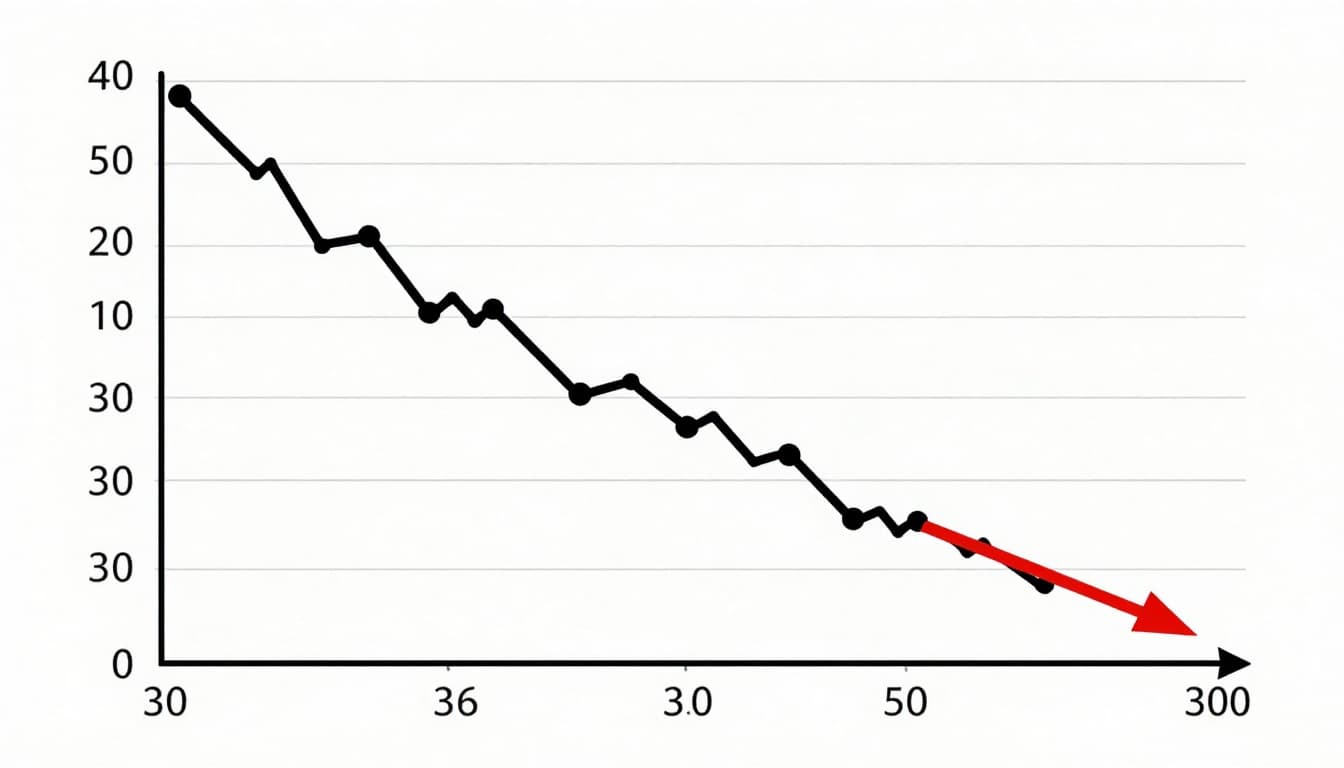
Avoid panic selling. Markets recover in 3-5 years usually. Stay the course instead.
Real People Retiring on $500k (or Close): Lessons from Their Stories
Real folks prove you can retire on 500k if you pair it with Social Security and smart habits. Average savings sit at $289k, yet many stretch less with frugality. An Oklahoma couple lives on $40k yearly from $20k withdrawals plus benefits. They inspire because low costs and discipline make it last 20-25 years. However, pitfalls like health issues trip others up. Let’s learn from both.
Success Stories from Low-Cost Living
Meet Jim and Linda in Tulsa, Oklahoma. Their $480k nest egg yields $19k yearly at 4%. Social Security adds $19k each, totaling $38k. They rent a $800 apartment, cook simple meals, and bike everywhere. No dining out. One old car. Groceries from Walmart stay at $400 monthly.
Scott mimics this elsewhere. He auto-transfers a fixed “paycheck” to checking, leaving the rest invested. Frugal wins include home cooking and Vanguard funds. A tech retiree spends $48k yearly in a cheap city, growing his pot despite low draws.
These stories last 20-25 years because they cut luxuries early. Walk daily. Shop small stores. In short, discipline frees time for joy.
What Went Wrong: Warnings from Those Who Ran Short
Health strikes fast. One woman hit 75 with cancer bills draining her $450k pot. Longevity pushed her to 93, forcing part-time work. Boomers withdraw just 2% yearly, scared of outliving funds amid rising medical costs.
Another couple faced hospital stays. Deductibles ate $20k quick. They adjusted by renting a room for income and skipping travel. Others freelance or delay retirement.
Factors include unexpected illness and living past 95. However, they pivot: Cut extras, earn side cash, move cheaper. Most importantly, build a health buffer now. You can too with these habits
Conclusion
You started wondering, can I retire on 500k, after hitting that savings goal. Now you see it works best if you live frugally in spots like Oklahoma or Nebraska. Pair your nest egg with Social Security for $45,000 or more yearly. Low housing, smart withdrawals at 3.5-4%, and healthy habits stretch it far.
However, average spending around $65,000 makes it risky without cuts. Healthcare bills climb fast, and market dips add pressure. Real stories show success through discipline, but health surprises trip some up.
So, track your expenses for a month right now. Use a simple app to spot leaks like groceries or transport. Then, chat with a financial advisor to run your numbers. Consider part-time work or relocation for extra buffer.
Many retirees thrive on simple joys, like home-cooked meals and park walks. They own homes outright and skip luxuries. You can too.
Back to Ways to Save Cash
Are you looking for better ways and tools to build your monthly revenue and brand? Be sure to check out our other resources located here to speed up the process.
Nathan
Dr. Nathan Pennington, DBA, earned his Doctor of Business Administration degree from the University of Missouri-St. Louis and brings over 15 years of online entrepreneurial experience in helping people learn how to blog, earn income online and build passive income streams outside of what the school system teaches.


